Deep Brain Stimulation (DBS) Surgery in India
Deep Brain Stimulation (DBS) is one of the most transformative advances in modern neurosurgery. For patients living with Parkinson’s disease, essential tremor, dystonia, or drug-resistant epilepsy – conditions that medications can no longer adequately control – DBS offers a proven, reversible, and adjustable path to meaningful symptom relief.
Key Facts About DBS Surgery in India
- What it is: A surgical procedure that implants electrodes in specific brain targets to deliver controlled electrical stimulation and regulate abnormal neural activity
- Who it is for: Patients with Parkinson’s disease, essential tremor, dystonia, drug-resistant epilepsy, OCD, or treatment-resistant depression – where medications have failed or caused intolerable side effects
- FDA approvals: Parkinson’s disease (2002, expanded 2016), dystonia (HDE, 2003), epilepsy – anterior nucleus of thalamus (2018), OCD (HDE, 2009)
- Reversible and adjustable: DBS can be switched off, reprogrammed, or removed – unlike ablative procedures
- DBS surgery cost in India: Approximately ₹8–15+ lakh depending on device, condition, and hospital; Dr Sataykam Baruah’s team provides a detailed quote after evaluation
- Available in Faridabad: Yes – at Amrita Hospital, Sector 88, Faridabad, by Dr Satyakam Baruah
Early Diagnosis Saves Lives - Book an Appointment Today with Dr Satyakam Baruah!
What is Deep Brain Stimulation (DBS)?
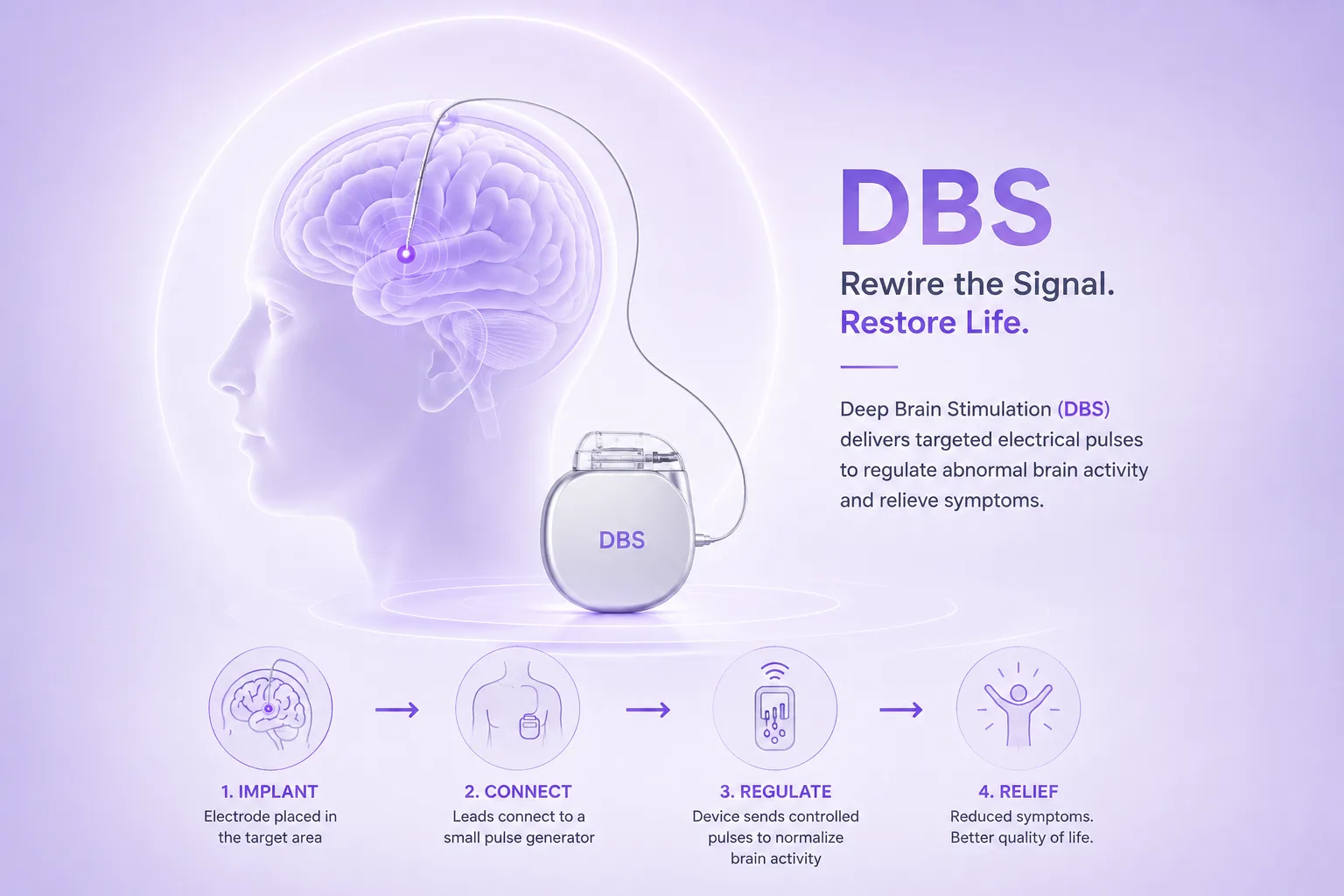
Deep Brain Stimulation (DBS) is a form of functional neurosurgery in which thin, insulated wire electrodes are surgically implanted into precisely targeted regions of the brain. These electrodes are connected, via an extension wire running under the skin, to a small battery-powered device called an Implantable Pulse Generator (IPG) – often called a “brain pacemaker” – placed beneath the skin of the chest or abdomen.
The IPG delivers continuous, controlled electrical pulses to the target brain region. These pulses modulate abnormal neural circuits that drive the symptoms of movement disorders, epilepsy, and certain psychiatric conditions.
DBS does not destroy brain tissue. It is reversible – the device can be switched off, reprogrammed, or surgically removed. This distinguishes it fundamentally from older ablative procedures such as thalamotomy or pallidotomy, which permanently destroy small areas of brain tissue.
The therapy has been in clinical use since the late 1980s. Today, more than 200,000 patients worldwide have received DBS implants, and the evidence base continues to grow with each passing year.
How Does DBS Work?
The brain communicates through electrical signals. In conditions like Parkinson’s disease, essential tremor, and dystonia, specific neural circuits become dysregulated – firing too rapidly, too slowly, or in abnormal patterns. This disrupted activity produces the tremors, rigidity, slowness, and involuntary movements that define these conditions.
DBS works by delivering precisely calibrated electrical pulses to interrupt or modulate these abnormal firing patterns. The exact mechanism is still being refined by researchers, but the clinical effect is well-established: symptom control that medications alone cannot achieve.
Key targets used in DBS surgery:
- Subthalamic nucleus (STN): The most common target for Parkinson’s disease; reduces tremor, rigidity, and bradykinesia, and typically allows significant medication reduction
- Globus pallidus internus (GPi): Used for Parkinson’s disease and dystonia; particularly effective for dyskinesias
- Ventral intermediate nucleus of the thalamus (VIM): The primary target for essential tremor; highly effective for tremor control
- Anterior nucleus of the thalamus (ANT): FDA-approved target for drug-resistant epilepsy (the SANTE trial, 2010)
- Anterior limb of the internal capsule / nucleus accumbens: Targets used in OCD and treatment-resistant depression
The IPG is programmed non-invasively after surgery using a wireless programmer. Stimulation parameters – frequency, amplitude, pulse width – are adjusted over weeks and months to optimise symptom control and minimise side effects.
Conditions Treated with DBS Surgery in India
DBS surgery in India is performed for a defined set of neurological and psychiatric conditions where the evidence base is strongest. The following conditions are treated as part of Dr Satyakam Baruah’s neuromodulation programme at Amrita Hospital, Faridabad.
Parkinson’s Disease
Parkinson’s disease is the most common indication for DBS worldwide. The FDA approved DBS for Parkinson’s disease in 2002, with an expanded indication in 2016 covering patients with motor complications of shorter duration.
DBS is considered when:
- Motor symptoms (tremor, rigidity, bradykinesia, freezing) are not adequately controlled by levodopa or other medications
- Medication-related complications have developed – particularly motor fluctuations (“on-off” phenomena) and dyskinesias
- The patient is otherwise in good health and cognitively intact
What the evidence shows: STN-DBS reduces OFF-period motor symptoms by approximately 60% and disabling dyskinesias by up to 80% compared to best medical therapy alone. Quality-of-life improvements are sustained at 36 months in randomised controlled trials. A 2019 long-term cohort study published in npj Parkinson’s Disease reported tremor improvement in 72.5% of patients at extended follow-up.
DBS does not slow the progression of Parkinson’s disease. It controls symptoms. This distinction matters, and Dr Satyakam Baruah discusses it explicitly with every patient and family before surgery.
Essential Tremor
Essential tremor is the most common movement disorder in adults – far more prevalent than Parkinson’s disease. When medications such as propranolol and primidone fail to control disabling hand, head, or voice tremor, DBS of the VIM thalamus is the most effective surgical option available.
Published reviews report that thalamic DBS produces tremor reduction of 70–90% in patients with essential tremor, with benefits sustained at six-year follow-up. For patients whose tremor prevents them from eating, writing, or working, this is life-changing.
Dystonia
Dystonia – characterised by sustained or repetitive involuntary muscle contractions causing abnormal postures and movements – can be severely disabling. DBS of the globus pallidus internus (GPi) received FDA Humanitarian Device Exemption approval for chronic, intractable primary dystonia in 2003.
Response in dystonia tends to be slower than in Parkinson’s disease. Meaningful improvement may take 3–6 months after implantation, as the brain gradually adapts to stimulation. Patients with primary (genetic) dystonia generally respond better than those with secondary dystonia.
Drug-Resistant Epilepsy
DBS for epilepsy targets the anterior nucleus of the thalamus (ANT), which is part of the Papez circuit – a network involved in seizure propagation. The landmark SANTE trial (Stimulation of the Anterior Nucleus of the Thalamus for Epilepsy), published in Epilepsia in 2010, demonstrated a 40.4% median reduction in seizure frequency at 3 months, increasing to 56% at 2 years. The FDA approved ANT-DBS for drug-resistant focal epilepsy in 2018.
DBS for epilepsy is considered for patients who:
- Have failed two or more appropriately chosen anti-seizure medications
- Are not candidates for resective surgery, or have had prior surgery without adequate seizure control
- Have focal or multifocal epilepsy without a single resectable focus
This is a core area of Dr Satyakam Baruah’s subspecialty practice. His training in robotic Stereo-EEG at the Montreal Neurological Institute directly informs his approach to epilepsy mapping and patient selection for neuromodulation.
OCD and Treatment-Resistant Depression
DBS for obsessive-compulsive disorder (OCD) targeting the anterior limb of the internal capsule received FDA Humanitarian Device Exemption approval in 2009 for severe, treatment-resistant cases. Clinical studies report meaningful symptom reduction in approximately 60% of patients who have failed multiple medications and psychotherapy.
Treatment-resistant depression (TRD) remains an investigational indication for DBS in most centres, with ongoing trials evaluating targets including the subgenual cingulate cortex and the nucleus accumbens. Dr Satayaka Baruah’s team evaluates each case individually and discusses current evidence and trial eligibility where applicable.
Who is a Candidate for DBS Surgery?
Not every patient with a movement disorder or epilepsy is a DBS candidate. The evaluation is thorough – and it should be. Getting the patient selection right is the single most important determinant of a good outcome.
You may be a suitable candidate if:
- You have a confirmed diagnosis of Parkinson’s disease, essential tremor, dystonia, or drug-resistant epilepsy
- Your symptoms significantly impair daily function, quality of life, or independence
- Medications have failed to provide adequate control, or have caused intolerable side effects
- You are in reasonably good general health and able to tolerate surgery under anaesthesia
- You have realistic expectations – DBS controls symptoms; it does not cure the underlying condition
- You are willing to attend regular follow-up appointments for device programming
DBS is generally not recommended if:
- Significant cognitive impairment or dementia is present (particularly for Parkinson’s patients)
- Active psychiatric conditions are inadequately treated
- The patient has a medical condition that substantially increases surgical risk
- For Parkinson’s disease: symptoms that do not respond to levodopa are unlikely to respond to DBS (with the exception of tremor)
- A clearly resectable epileptic focus exists – in that case, resective surgery remains the preferred option
The evaluation at Amrita Hospital includes neurological examination, neuropsychological assessment, brain MRI, and – for epilepsy candidates – video-EEG monitoring. For Parkinson’s patients, a formal levodopa challenge test is performed to assess medication responsiveness.
The DBS Procedure: Step by Step
DBS surgery is not a single operation. It is a staged process involving pre-surgical evaluation, two surgical stages, and an ongoing programming phase. Here is what to expect.
Stage 1 – Pre-Surgical Evaluation
Before any surgery is planned, a comprehensive evaluation is completed:
- Neurological and neuropsychological assessment: Cognitive function, mood, and neurological status are formally evaluated. This is not a formality – it directly influences target selection and patient counselling.
- High-resolution brain MRI: 3-Tesla MRI with specific DBS planning sequences is used to identify the target nucleus with sub-millimetre precision.
- Levodopa challenge (Parkinson’s): Motor function is assessed in the medication-off and medication-on states to quantify levodopa responsiveness.
- Video-EEG monitoring (epilepsy): Seizure characterisation and localisation are essential before ANT-DBS is considered.
- Multidisciplinary review: Complex cases are reviewed with neurologists, neuroradiologists, and neuropsychologists before a final recommendation is made.
- Informed consent counselling: Dr Baruah discusses realistic outcomes, risks, alternatives, and the programming process in detail. Families are included in this conversation.
Stage 2 – Brain Lead Implantation
This is the primary surgical stage. It is typically performed under local anaesthesia with sedation, though general anaesthesia is used in selected cases (particularly paediatric patients and some dystonia cases).
- The patient’s head is secured in a stereotactic frame or using a frameless neuronavigation system to enable sub-millimetre targeting accuracy.
- A small burr hole (approximately 14 mm) is made in the skull.
- The electrode lead is advanced to the target nucleus under intraoperative neurophysiological monitoring – recording the characteristic firing patterns of the target nucleus to confirm precise placement.
- Intraoperative test stimulation is performed to assess symptom improvement and identify any stimulation-related side effects before the lead is permanently fixed.
- The procedure typically takes 3–5 hours depending on whether one or both hemispheres are implanted.
Stage 3 – IPG (Pulse Generator) Implantation
The IPG implantation is typically performed as a separate procedure, 1–2 weeks after lead implantation, under general anaesthesia.
- A small incision is made below the collarbone or in the upper abdomen.
- The IPG is placed in a subcutaneous pocket and connected to the brain leads via an extension wire tunnelled under the skin of the neck and scalp.
- The IPG is approximately the size of a matchbox. Modern rechargeable devices – such as the Medtronic Percept PC or Abbott Infinity – have battery lives of 9–15 years before replacement is needed.
Stage 4 – Programming and Follow-Up
Programming begins 2–4 weeks after IPG implantation, once surgical swelling has resolved.
- The neurologist or neurosurgeon uses a wireless programmer to activate the device and set initial stimulation parameters.
- Multiple programming sessions are typically required over the first 3–6 months to optimise settings. This is normal and expected.
- For Parkinson’s patients, medications are gradually adjusted alongside programming – the goal is to achieve the best symptom control with the lowest possible medication dose.
- Follow-up continues long-term, with annual or biannual reviews to monitor battery status, adjust programming, and assess disease progression.
DBS Surgery Cost in India
Deep brain stimulation cost in India typically ranges from ₹8 lakh to ₹15 lakh+ for the complete procedure. This range reflects genuine variability across several factors:
- Device type and brand: Rechargeable IPGs (longer battery life, higher upfront cost) versus non-rechargeable; Medtronic, Abbott, or Boston Scientific systems differ in price
- Unilateral vs bilateral implantation: Bilateral DBS (both brain hemispheres) involves two lead implantations and costs more than unilateral surgery
- Condition being treated: Parkinson’s disease, dystonia, and epilepsy may require different targets and surgical complexity
- Hospital facilities and infrastructure: A NABH-accredited tertiary care centre with dedicated neuro-ICU, intraoperative neurophysiology, and 3T MRI will reflect those capabilities in cost
- Length of hospital stay and rehabilitation requirements
Do not make a decision based on cost alone. DBS is a precision surgical procedure. The experience of the surgeon, the quality of the pre-surgical evaluation, and the availability of long-term programming support matter far more than a lower headline price.
Dr Satyakam Baruah’s team at Amrita Hospital, Faridabad provides a detailed, itemised cost estimate after the initial evaluation – once the target, device type, and surgical plan have been determined. Contact the clinic directly to arrange an assessment.
Struggling with Seizures, Persistent Headaches, or Other Neurological Symptoms?
Benefits of Deep Brain Stimulation
DBS offers a distinct set of advantages that make it the preferred surgical option for appropriately selected patients.
- Reversible and adjustable: Unlike ablative surgery, DBS can be switched off, reprogrammed, or removed. If a better treatment becomes available, nothing has been permanently altered.
- Sustained symptom control: Clinical evidence demonstrates durable benefit at 5, 10, and even 15 years in Parkinson’s disease and essential tremor.
- Medication reduction: Most Parkinson’s patients achieve significant reductions in levodopa dose after DBS, reducing medication-related side effects.
- Quality of life improvement: Validated quality-of-life measures show consistent improvement across conditions – patients regain the ability to eat independently, write, work, and sleep.
- Bilateral treatment available: Both hemispheres can be treated, which is not possible with ablative procedures without unacceptable risk.
- Ongoing optimisation: Stimulation parameters can be adjusted non-invasively as the disease evolves, without additional surgery.
- Adaptive DBS: Next-generation devices – including Medtronic’s Percept PC with BrainSense technology (FDA-approved February 2025) – can record brain signals and adjust stimulation in real time.
Risks and Side Effects of DBS
DBS is a safe procedure in experienced hands, but it carries real surgical and device-related risks that every patient must understand before consenting.
Surgical risks (occurring in a small minority of patients):
- Intracranial haemorrhage (bleeding): The most serious surgical risk occurs in approximately 1–2% of procedures. Symptomatic haemorrhage causing permanent deficit is rarer still.
- Infection: Hardware infection (lead or IPG) occurs in approximately 2–5% of cases and may require device removal and reimplantation.
- Stroke: Rare, but possible with any intracranial procedure.
- Lead misplacement: Requires revision surgery; minimised by intraoperative neurophysiology and imaging confirmation.
Stimulation-related side effects (usually reversible by adjusting settings):
- Tingling or numbness (paraesthesia)
- Speech or swallowing difficulties
- Mood changes – including, rarely, depression or hypomania
- Balance or gait changes
- Visual disturbance
Device-related issues:
- Battery depletion (requires IPG replacement surgery – a minor procedure)
- Lead fracture or hardware failure (uncommon)
- Skin erosion over the IPG or extension wire
Important: The majority of stimulation-related side effects resolve with reprogramming. Patients should not adjust device settings independently – all changes should be made by the treating team.
Dr Satyakam Baruah discusses each of these risks in detail during the pre-surgical consultation, in the context of the individual patient’s condition and anatomy.
DBS vs Other Neuromodulation Therapies
DBS is one of several neuromodulation options available for movement disorders and epilepsy. The right choice depends on the condition, seizure or symptom type, surgical candidacy, and patient preference. The table below provides a direct comparison.
| Feature | DBS | VNS | RNS | TNS (eTNS) |
| Invasiveness | Invasive (brain implant) | Minimally invasive (neck implant) | Invasive (brain implant) | Non-invasive (external) |
| Surgery required | Yes (craniotomy) | Yes (neck incision) | Yes (craniotomy) | No |
| Reversible | Partially | Partially | Partially | Yes (fully) |
| Primary indications | Parkinson’s, tremor, dystonia, epilepsy, OCD | Epilepsy, depression | Focal drug-resistant epilepsy | Drug-resistant focal epilepsy |
| Mechanism | Continuous or adaptive stimulation of deep brain targets | Vagal afferents → brainstem → cortex | Closed-loop cortical stimulation at seizure focus | Trigeminal afferents → brainstem → cortex |
| Typical responder rate | 60–90% (condition-dependent) | ~50–55% at 2 years | ~50–60% at 2 years | ~40–50% (≥50% seizure reduction) |
| Key advantage | Broadest indication range; adjustable; long-term data | Long clinical track record; no craniotomy | Personalised closed-loop response | No surgery; home-based; fully reversible |
| Key limitation | Most invasive neuromodulation option | Requires surgical implant; no brain targeting | Requires precise focus localisation | Evidence base still growing |
| Paediatric use | Selected cases | Yes | Selected cases | Yes (age 9+) |
Dr Satyakam Baruah’s approach is to match the neuromodulation strategy to the individual patient – not to recommend a single device for everyone. For some patients, DBS is the right choice. For others, VNS, RNS, or TNS will be more appropriate. This decision is made after a thorough, multidisciplinary evaluation.
Life After DBS Surgery
Most patients are discharged from hospital within 3–5 days of lead implantation and within 1–2 days of IPG implantation. Full recovery from the surgical procedure takes approximately 4–6 weeks.
What to expect in the weeks and months after surgery:
- Initial programming: Device activation begins 2–4 weeks post-surgery. The first session sets conservative baseline parameters.
- Gradual optimisation: Symptom control improves progressively over the first 3–6 months as programming is refined. Patience is essential – DBS is not an overnight fix.
- Medication adjustment: For Parkinson’s patients, levodopa doses are typically reduced as stimulation is optimised. This is done gradually, under close supervision.
- Activity restrictions: Patients avoid strenuous physical activity, contact sports, and MRI scans (unless using an MRI-conditional device) in the early post-operative period. Specific restrictions are discussed at discharge.
- Long-term follow-up: Annual or biannual reviews are standard. Battery status is monitored, and programming is adjusted as the underlying condition evolves.
- Device safety: Patients receive a DBS identification card and are advised on device interactions with security systems, medical procedures, and certain electrical equipment.
The majority of patients with Parkinson’s disease, essential tremor, and dystonia report meaningful improvement in daily function and quality of life within 6 months of surgery. For epilepsy, seizure reduction tends to accumulate over 12–24 months.
Life after DBS is not symptom-free for most patients – but it is substantially better than life before it.
Why Choose Dr Satyakam Baruah for DBS in Faridabad?
Choosing the right surgeon for DBS surgery in Faridabad is the most consequential decision in this entire process. The outcome of DBS depends not just on the device, but on the precision of targeting, the quality of the pre-surgical evaluation, and the expertise of long-term programming support.
Dr Satyakam Baruah’s credentials:
- MCh Neurosurgery from NIMHANS, Bengaluru – one of India’s foremost neuroscience institutions, with one of the country’s most established DBS programmes
- Subspecialty fellowship at the Montreal Neurological Institute, McGill University, Canada – a globally recognised centre for functional neurosurgery, epilepsy, and neuromodulation
- Member of the MNI Robotic Stereo-EEG Team (2018–2019) – with direct experience in advanced epilepsy mapping and surgical planning
- 20+ years of neurosurgical experience, 5,000+ procedures performed, 2,000+ epilepsy patients treated
- Active memberships: NSI, WSSFN (World Society for Stereotactic and Functional Neurosurgery), AANS, and Advisory Board Member of E.A.S.E., Hyderabad
What sets the approach apart:
- Neuromodulation surgery India is not a single decision – it is a pathway. Every patient is evaluated to determine whether DBS, VNS, RNS, TNS, or resective surgery is the most appropriate next step.
- Imaging-first protocol: Every DBS candidate undergoes dedicated 3T MRI with DBS planning sequences and neurophysiological assessment before any surgical recommendation is made.
- Multidisciplinary review: Complex cases are discussed with neurologists, neuroradiologists, and neuropsychologists before a plan is finalised.
- Transparent communication: Realistic response rates, timelines, and alternatives are discussed at every consultation. There are no guarantees – only evidence-based decisions made in the patient’s best interest.
- Deep brain stimulation Faridabad: Amrita Hospital, where Dr Satyakam Baruah practices, is a NABH and NABL-accredited tertiary care centre with state-of-the-art neuro-imaging, specialised neuro-ICUs, advanced EEG and video-EEG monitoring, and internationally aligned standards of care.
For patients travelling from across India – or from abroad – the combination of subspecialty expertise, advanced infrastructure, and a genuinely patient-centred approach makes Amrita Hospital, Faridabad a serious choice for DBS surgery.
Book Your DBS Consultation
If you or a family member is living with Parkinson’s disease, essential tremor, dystonia, or drug-resistant epilepsy – and medications are no longer providing adequate control – a specialist evaluation is the right next step.
Deep Brain Stimulation surgery in Faridabad is available through Dr Satyakam Baruah’s neuromodulation programme at Amrita Hospital, Faridabad. The right treatment is determined by a thorough, individualised assessment – not a default recommendation.
To book a consultation with Dr Satyakam Baruah:
- 📞 Phone: +91-9650708834
- 💬 WhatsApp: Available via the same number
- 📧 Email: contact.satyakambaruah@gmail.com
- 📍 Address: Amrita Hospital, Mata Amritanandamayi Marg, RPS City, Sector 88, Faridabad, Haryana 121014
Bring any prior MRI reports, neurological assessments, medication history, and EEG recordings (for epilepsy patients) to your first appointment. The more information available, the more precise and productive the evaluation.
Frequently Asked Questions
What is Deep Brain Stimulation, and how is it different from brain surgery? expand_more
DBS is a form of functional neurosurgery - it does not remove or destroy brain tissue. Instead, thin electrode leads are implanted in specific brain targets and connected to a pulse generator (IPG) placed under the skin. The IPG delivers electrical stimulation that modulates abnormal brain circuits. Unlike ablative procedures, DBS is fully reversible and adjustable. The device can be switched off, reprogrammed, or removed at any time.
Who qualifies for DBS surgery in India? expand_more
DBS is considered for patients with Parkinson's disease, essential tremor, dystonia, drug-resistant epilepsy, or OCD - where symptoms are not adequately controlled by medications and the patient is in good enough health to tolerate surgery. Cognitive status, psychiatric history, and medication responsiveness are all assessed during the pre-surgical evaluation. A formal multidisciplinary evaluation is required before any patient is listed for surgery.
What is the success rate of DBS surgery? expand_more
"Success rate" depends on the condition and how success is defined. For Parkinson's disease, STN-DBS reduces OFF-period motor symptoms by approximately 60% and disabling dyskinesias by up to 80% in published randomised trials. For essential tremor, thalamic DBS achieves 70–90% tremor reduction. For drug-resistant epilepsy, ANT-DBS produces a median 56% seizure reduction at 2 years (SANTE trial). These are population-level figures - individual outcomes vary, and realistic expectations are discussed in detail during consultation.
Is DBS surgery reversible? expand_more
Yes. This is one of DBS's most important advantages over older ablative procedures. The device can be switched off at any time. If the patient does not benefit, or if a better treatment becomes available, the hardware can be surgically removed. The brain itself is not permanently altered by DBS.
What does DBS surgery cost in India? expand_more
Deep brain stimulation cost in India typically ranges from ₹8 lakh to ₹15 lakh+, depending on the device type (rechargeable vs non-rechargeable), whether surgery is unilateral or bilateral, the condition being treated, and the hospital's infrastructure. Dr Baruah's team provides a detailed, itemised cost estimate after the initial evaluation - once the surgical plan has been determined. Please contact the clinic directly for current pricing.
How long is the recovery after DBS surgery? expand_more
Most patients are discharged within 3–5 days of lead implantation. Full surgical recovery takes approximately 4–6 weeks. Device programming begins 2–4 weeks after IPG implantation, and symptom optimisation continues over the first 3–6 months. DBS is not an immediate fix - meaningful improvement accumulates progressively as programming is refined and, for Parkinson's patients, medications are adjusted.

Dr. Satyakam Baruah’s Medical Content Team
Dr. Satyakam Baruah’s medical content team specialises in creating accurate, clear, and patient-focused healthcare content. With strong clinical understanding and expertise in technical writing and SEO, the team translates complex medical information into reliable, accessible resources that support informed decisions and uphold Dr. Satyakam's commitment to quality care.
This content is reviewed by Dr. Satyakam Baruah
Related Treatments

Stereotactic Brain Biopsy in Faridabad
A stereotactic brain biopsy is a minimally invasive procedure that uses 3D imaging to guide a thin needle into a…

Minimally Invasive Spine Surgery in Faridabad
Living with persistent back or neck pain can affect every aspect of your life from your ability to work and…

Epilepsy Surgery in Faridabad
Epilepsy surgery in Faridabad is one of the most effective and life-changing epilepsy treatment options for patients whose seizures are not controlled with…

Laser Interstitial Thermal Therapy (LITT) in Faridabad
A brain tumor diagnosis or a lifelong struggle with drug-resistant epilepsy often leaves patients facing a difficult choice: undergo high-risk…
Neuronavigation Surgery in Faridabad
The fear most patients carry into brain surgery is not about the tumor. It is about what the surgeon might…

Brain Tumor Surgery in Faridabad
Brain tumor surgery in Faridabad under Dr. Satyakam Baruah includes the diagnosis, surgical treatment, and long-term management of both benign…
Related Blogs
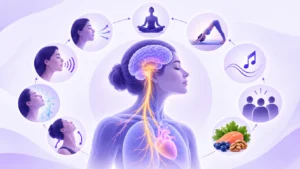
Vagus Nerve Stimulation Exercises and At-Home Techniques
Vagus nerve stimulation exercises – including slow diaphragmatic breathing, humming, cold water exposure, yoga, and…
Read Article →
Beyond Seizures: What Life Looks Like After Successful Epilepsy Surgery
Epilepsy surgery achieves seizure freedom in 60–70% of carefully selected patients with drug-resistant epilepsy. Recovery…
Read Article →
Recovery After Spine Surgery: Complete Patient Guide
Spine surgery recovery progresses from hospital discharge and gentle walking in weeks one to two,…
Read Article →
Epilepsy Support Groups in India: Finding Community and Help
Epilepsy support groups in India connect patients and caregivers with peer support, practical advice, and…
Read Article →
Diet for Epilepsy Patients: Foods to Eat and Avoid
Epilepsy patients benefit from magnesium-rich, omega-3, and antioxidant foods while avoiding refined sugar, alcohol, and…
Read Article →
Is Epilepsy Hereditary?
In Summary – What You Need to Know Epilepsy is not always hereditary. About 30–40% of cases have…
Read Article → WhatsApp