Understanding Deep Brain Stimulation: Benefits, Procedure, Risks & Recovery
Living with a neurological disorder can slowly change the way a person experiences everyday life. Simple activities like writing, walking, eating, or even speaking comfortably may become difficult over time. While medications often help in the early stages, some patients continue to experience worsening symptoms despite treatment. This is where deep brain stimulation has become an important option in modern neurological care.Today, many patients search for answers to questions like what is DBS, how deep brain stimulation works, and whether DBS surgery is safe. Although the name sounds highly technical, deep brain stimulation treatment is designed to help regulate abnormal brain activity that contributes to movement disorders and certain neurological conditions.For carefully selected patients, DBS therapy may help improve symptom control, daily functioning, and quality of life. Understanding how the procedure works and who may benefit from it can make the treatment journey feel less overwhelming.
Early Diagnosis Saves Lives - Book an Appointment Today with Dr Satyakam Baruah!
What Is Deep Brain Stimulation?
Deep brain stimulation, commonly known as DBS, is an advanced form of brain stimulation used to manage symptoms associated with neurological disorders such as Parkinson’s disease, tremors, dystonia, and epilepsy.
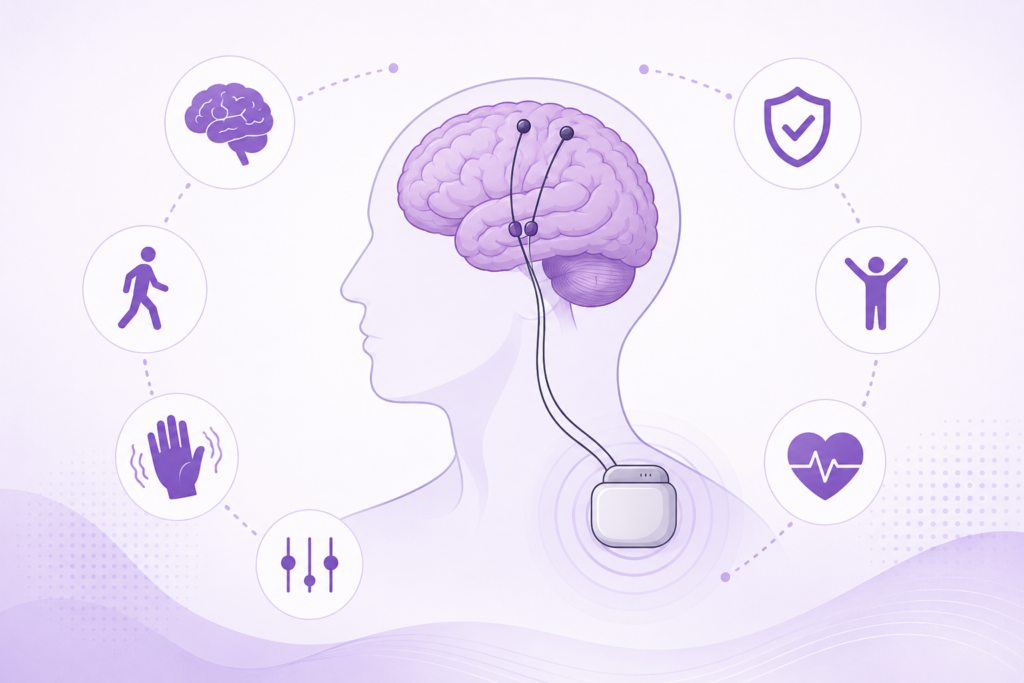
The procedure involves placing thin electrodes into carefully selected areas of the brain. These electrodes are connected to a small implanted device called a neurostimulator, usually placed under the skin near the chest. The device sends controlled electrical impulses that help regulate abnormal brain signals.
Many patients asking what DBS is are relieved to learn that the procedure does not remove or destroy brain tissue. Instead, it works by adjusting disrupted electrical communication pathways inside the brain. Since the stimulation settings can be modified over time, deep brain stimulation treatment is highly personalised according to each patient’s symptoms and response.
How Does Deep Brain Stimulation Work?
One of the most common patient concerns is understanding how deep brain stimulation works. The brain normally communicates through electrical signals, but in certain neurological disorders these signals may become irregular or overactive. This abnormal activity can lead to tremors, stiffness, involuntary movements, or seizures.
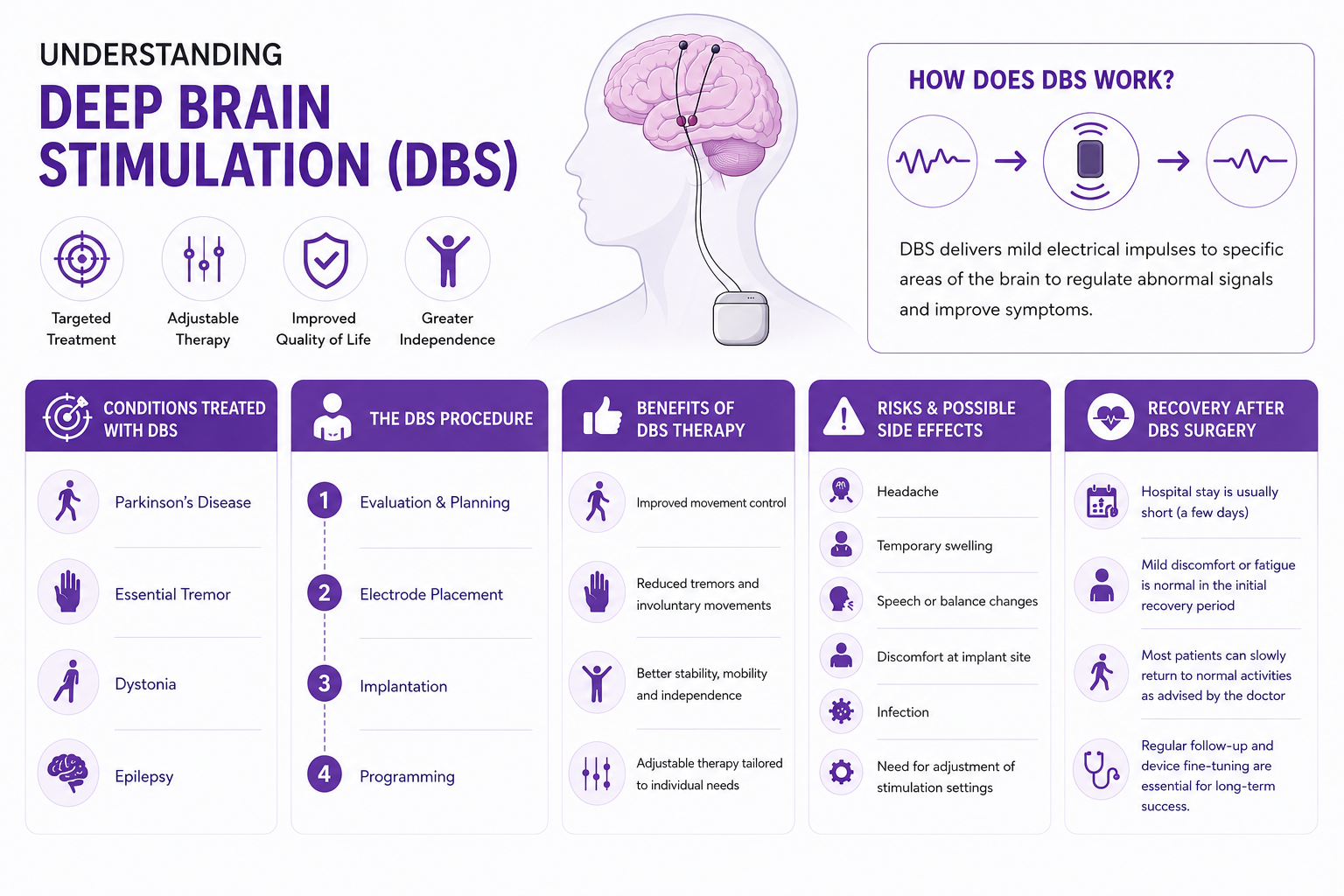
During the deep brain stimulation procedure, electrodes are placed into specific brain regions responsible for symptom control. The implanted neurostimulator then delivers mild electrical impulses to help regulate abnormal neural activity.
Unlike medications that affect the entire body, DBS surgery directly targets the affected brain circuits. This targeted approach is one reason why DBS therapy may be considered when medications alone are no longer providing adequate symptom control.
Conditions Treated With Deep Brain Stimulation
One of the most recognised uses of deep brain stimulation for Parkinson’s is improving symptoms such as tremors, stiffness, slowed movements, and medication fluctuations. Many patients experience better movement control and improved daily functioning after treatment.
Another important use is DBS for tremors, particularly in patients with essential tremor that affects tasks like writing, eating, or holding objects steadily.
Apart from movement disorders, deep brain stimulation treatment may also be considered for dystonia and selected cases of epilepsy where seizures remain difficult to manage with medications.
This is where Neurosurgery specialists in Faridabad like Dr. Satyakam Baruah play an important role in patient evaluation and advanced neurosurgical planning. Dr. Baruah has specialised training in epilepsy surgery and functional neurosurgery from the Montreal Neurological Institute (MNI), Canada, along with neurosurgical training from NIMHANS, Bengaluru. His work includes advanced neuromodulation techniques such as DBS and VNS for patients with difficult neurological conditions.
In patients with drug-resistant epilepsy or complex movement disorders, treatment planning often requires highly detailed brain mapping, imaging analysis, and personalised stimulation strategies. Advanced brain stimulation procedures like DBS are usually considered only after careful neurological evaluation.
Understanding the Deep Brain Stimulation Procedure
The thought of undergoing deep brain stimulation surgery can naturally feel intimidating for patients and families. However, understanding the process often helps reduce anxiety surrounding the treatment.
The journey usually begins with neurological assessments, MRI scans, and detailed discussions about symptoms and treatment goals. These investigations help identify the exact brain targets involved in symptom generation.
During the deep brain stimulation procedure, thin electrodes are carefully inserted into selected brain regions. A pulse generator is then implanted under the skin and connected to the electrodes through extension wires.
After healing, the device is programmed over several follow-up visits. Since stimulation settings can be adjusted according to symptom response, DBS therapy often requires ongoing fine-tuning for the best results.
Specialists trained in functional neurosurgery, including DBS and epilepsy-related neuromodulation procedures, focus not only on symptom control but also on preserving important neurological functions and improving long-term quality of life.
Benefits of DBS Therapy
For carefully selected patients, DBS therapy may offer meaningful improvements in movement control and day-to-day functioning. Many patients report reduced tremors, better mobility, improved hand stability, and fewer involuntary movements after treatment.
Patients undergoing deep brain stimulation for Parkinson’s may notice improvements in stiffness and movement fluctuations, while individuals receiving DBS for tremors often experience better control during routine activities.
One important advantage of deep brain stimulation treatment is that it is adjustable. Unlike irreversible procedures, stimulation settings can be modified over time according to symptom progression and patient response.
While outcomes vary between individuals, the overall aim of deep brain stimulation is to improve independence and quality of life rather than permanently cure the underlying neurological disorder.
Risks and Deep Brain Stimulation Side Effects
Like all surgical procedures, DBS surgery carries certain risks and possible complications. Understanding these risks is an important part of treatment planning.
Some potential deep brain stimulation side effects may include temporary swelling, headache, speech changes, balance issues, discomfort around the implant site, or infection. In some cases, stimulation settings may require adjustment if unwanted symptoms occur.
Most side effects are manageable with regular follow-up and careful device programming. Long-term monitoring is an essential part of successful DBS therapy.
Struggling with Seizures, Persistent Headaches, or Other Neurological Symptoms?
Is Deep Brain Stimulation Right for You?
Advances in deep brain stimulation treatment have created new possibilities for patients living with movement disorders and complex neurological conditions. Although deep brain stimulation surgery is not considered a cure, it may help improve symptom control, independence, and overall quality of life in selected patients.
Understanding what is DBS, how does deep brain stimulation work, possible deep brain stimulation side effects, and the realities of recovery after DBS surgery can help patients feel more informed and confident while exploring treatment options

 WhatsApp