Vagus Nerve Stimulation Exercises and At-Home Techniques
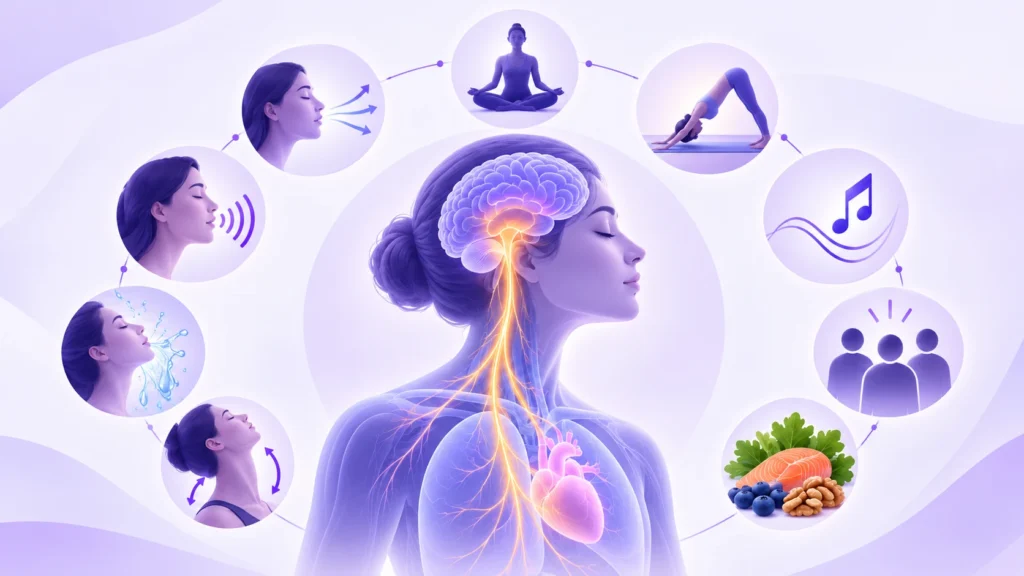
Vagus nerve stimulation exercises – including slow diaphragmatic breathing, humming, cold water exposure, yoga, and neck stretches – improve vagal tone, reduce stress, and support autonomic regulation at home. These techniques complement epilepsy and anxiety management but do not replace clinical VNS therapy. Through Beyond Seizures, Dr. Satyakam Baruah’s patient-centred epilepsy initiative, patients living with drug-resistant epilepsy can explore whether implanted VNS therapy is clinically appropriate alongside these supportive at-home practices.
Early Diagnosis Saves Lives - Book an Appointment Today with Dr Satyakam Baruah!
What Does “Stimulating the Vagus Nerve” Actually Mean?
The vagus nerve is part of the parasympathetic nervous system – the branch responsible for rest, digestion, and recovery. Stimulating it means activating this pathway: slowing the heart rate, lowering cortisol, reducing the inflammatory response, and helping the brain shift away from a state of threat.
Medically, vagus nerve stimulation (VNS) is also a specific clinical therapy – an implanted device used in drug-resistant epilepsy and treatment-resistant depression. That is a separate, supervised treatment pathway. What this blog covers is different: the non-invasive, at-home exercises that activate the same nerve through its accessible branches, using breath, sound, movement, and cold.
These techniques do not replace medical treatment. But for patients managing epilepsy, anxiety, or autonomic dysfunction alongside their treatment plan, they are worth knowing.
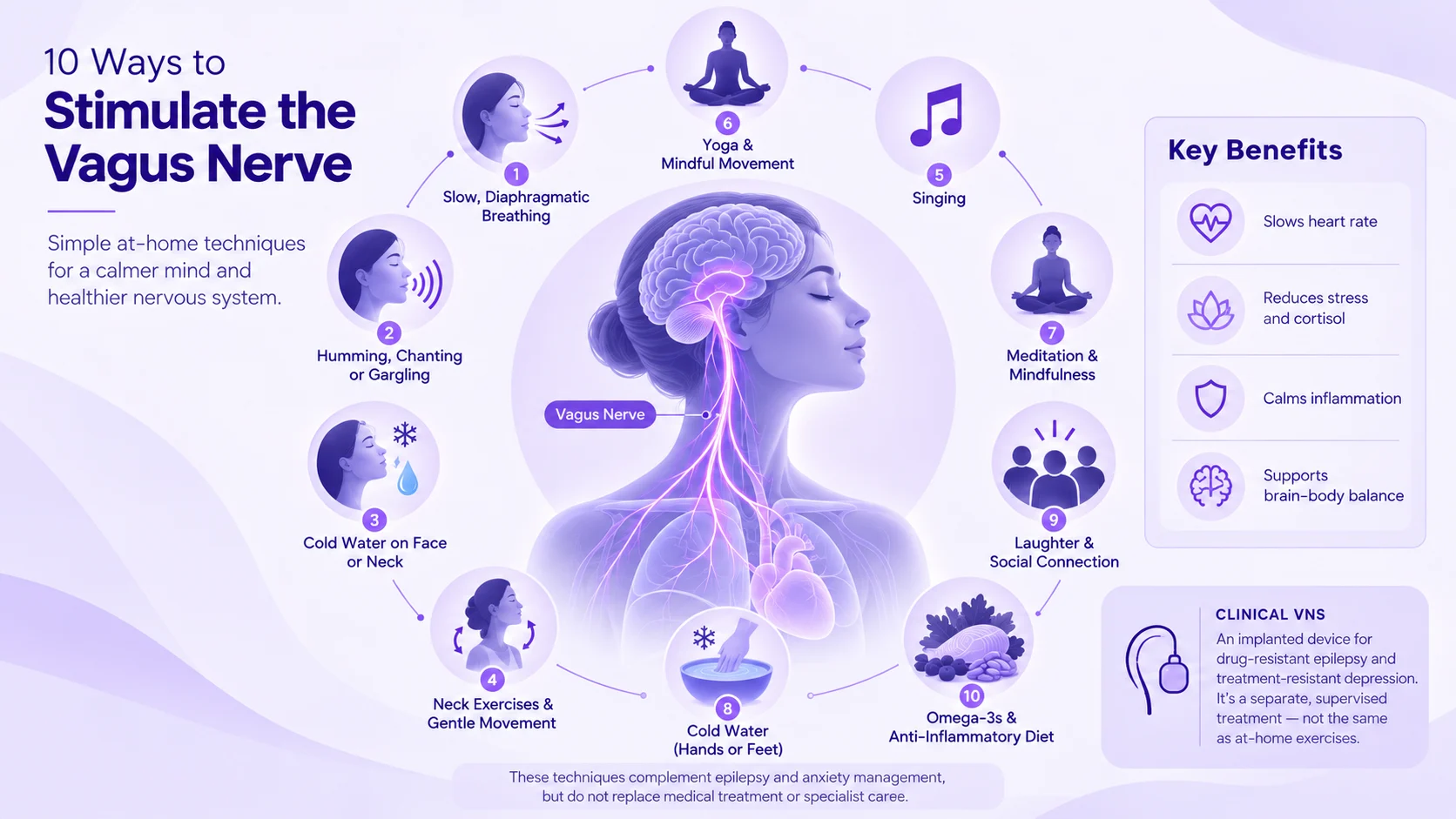
10 Ways to Stimulate the Vagus Nerve at Home
1. Slow, Diaphragmatic Breathing
This is the most evidence-backed vagus nerve reset exercise available – and it requires nothing. Breathing slowly, especially with a longer exhale than inhale, directly activates vagal afferents and increases heart rate variability (HRV), a reliable marker of vagal tone.
Try this: Inhale for 4 counts, hold for 1, exhale for 6–8 counts. Do this for 5–10 minutes. The extended exhale is the key – it signals safety to the nervous system.
2. Humming, Chanting, or Gargling
The vagus nerve passes through the throat and innervates the larynx. Any vibration in this region – humming a tune, chanting, or vigorous gargling with water – sends direct signals up the vagal pathway to the brainstem. This is one of the simplest vagus nerve tapping techniques people overlook.
Even 2–3 minutes of humming after waking up or before sleep activates this pathway meaningfully. Many yoga traditions have used this – through practices like brahmari pranayama (humming bee breath) – for centuries, without knowing the neuroscience behind it.
3. Cold Water on the Face or Neck
Splashing cold water on the face, or a brief cold shower at the end of bathing, triggers what is called the diving reflex – a powerful vagal activation that slows heart rate and redistributes blood flow. This is one of the best vagus nerve exercises for acute anxiety or a racing heart.
The vagus nerve reset through cold exposure does not need to be extreme. A 30-second cold rinse at the end of a shower is enough to shift autonomic tone meaningfully for many people.
4. Neck Exercises and Gentle Cervical Movement
The vagus nerve exits the skull through the jugular foramen and travels down the neck in close proximity to the cervical vertebrae and surrounding musculature. Tension in the neck – from poor posture, stress, or injury – can impair vagal signalling.
Vagus nerve reset neck exercises are straightforward: slow lateral neck rotations, gentle chin-to-chest stretches, and ear-to-shoulder tilts held for 20–30 seconds on each side. These are not aggressive physiotherapy moves. They are deliberate, slow movements designed to release tension around the nerve’s pathway and restore more fluid signalling.
Do these in the morning or before bed. Avoid rapid or forceful movements.
5. Singing
Related to humming, but different in intensity. Singing activates the muscles of the soft palate and pharynx – areas directly innervated by the vagus nerve. Research from the field of music therapy suggests that group singing in particular elevates oxytocin and improves HRV, both markers of vagal engagement.
You do not need to sing well. Singing in the shower counts. So does singing along to music in the car.
6. Yoga and Slow, Mindful Movement
Yoga is one of the most comprehensive vagus nerve stimulation exercises that exist – combining breath control, physical movement, inversion, and mental focus in a single practice. Poses that involve gentle forward bends, inversions (legs-up-the-wall being the most accessible), and long holds with controlled breathing are particularly effective.
The mechanism is multi-layered: breath control activates vagal breathing pathways, inversions shift blood distribution and affect baroreceptors, and mindful attention reduces sympathetic nervous system activity overall.
A 20–30 minute yoga session three to four times a week is a meaningful addition to any autonomic health routine.
7. Meditation and Mindfulness Practice
Sustained meditative states reliably increase HRV and reduce cortisol. The vagus nerve is central to this: the prefrontal cortex’s ability to regulate the body’s threat response runs partly through vagal pathways.
Even 10 minutes of focused breath awareness daily – noticing the breath, returning attention when it wanders – produces measurable changes in autonomic balance over weeks. This is particularly relevant for patients with anxiety-triggered symptoms, where stress and seizure risk interact directly.
8. Cold Water Immersion (Hands or Feet)
For those who cannot tolerate a cold shower, immersing hands or feet in cool water achieves a milder version of the same effect. This is one of the more accessible vagus nerve reset exercises for elderly patients or those with physical limitations.
Hold for 1–2 minutes. The sensation should be cool and slightly uncomfortable, not painful.
9. Laughter and Social Connection
This sounds simplistic – it is not. The social engagement system, as described by Dr Stephen Porges’s Polyvagal Theory, connects the vagus nerve directly to our capacity for safe, connected interaction. Genuine laughter, warm eye contact, and time with trusted people activate the ventral vagal complex – the evolutionarily newest part of the vagal system.
For epilepsy patients in particular, social isolation compounds the burden of the condition. Intentional social connection is not a soft recommendation – it is a neurologically grounded one.
10. Omega-3 Fatty Acids and a Low-Inflammatory Diet
Vagal tone is also affected by what you eat. Chronic low-grade inflammation suppresses vagal signalling. A diet rich in omega-3 fatty acids (walnuts, flaxseeds, fatty fish), polyphenols (turmeric, berries, dark leafy greens), and fibre supports a healthy gut-brain axis – which communicates substantially via the vagus nerve.
This is not a separate subject. Diet and vagal tone are directly linked, and optimising one supports the other.
Who Are These Techniques Most Relevant For?
These are general wellness techniques. Most healthy adults will benefit from them simply as stress-reduction and autonomic regulation tools.
For certain patient populations, however, they carry more specific relevance:
- Epilepsy patients: The vagus nerve is the anatomical basis of VNS therapy – a clinically approved neuromodulation treatment. At-home vagal exercises do not replicate the effects of an implanted VNS device, but they contribute to the broader autonomic environment in which seizure thresholds are set. Stress, sleep deprivation, and autonomic dysregulation are established seizure triggers – and vagal exercises address all three.
- Anxiety and panic disorders: The best vagus nerve exercises for anxiety – slow breathing, cold exposure, and yoga – are also among the most studied non-pharmacological interventions for generalised anxiety and panic.
- Chronic fatigue and post-viral conditions: Low vagal tone is increasingly recognised as a contributor to post-infectious fatigue syndromes. Gentle vagal activation exercises form part of rehabilitation programmes in several specialised centres.
A Note on Clinical Vagus Nerve Stimulation
At-home exercises are not a substitute for clinical vagus nerve stimulation when it is medically indicated.
Implanted VNS therapy is an approved, evidence-backed neuromodulation treatment for drug-resistant epilepsy and treatment-resistant depression. It delivers precisely calibrated electrical pulses to the vagus nerve in the neck and has a long clinical track record.
Dr Satyakam Baruah, through his neuromodulation programme and the Beyond Seizures initiative – which focuses on comprehensive, patient-centred epilepsy care beyond just medication management – evaluates patients for VNS and other neuromodulation pathways based on detailed clinical criteria. The decision to pursue implanted VNS is made after thorough evaluation: seizure characterisation, medication history, neuroimaging, and video-EEG assessment. It is never a default recommendation.
If you or a family member is living with drug-resistant epilepsy and is exploring neuromodulation options, a specialist evaluation is the appropriate next step – not a self-directed one.
Getting Started: What to Actually Do This Week
You do not need to implement all ten of these techniques at once. Start with two.
The most impactful pairing for most people: slow breathing with an extended exhale (5–10 minutes in the morning) and gargling or humming for 2–3 minutes in the evening. Both are free, require no equipment, and can be built into existing routines within days.
Add cold exposure, neck exercises, or yoga when you are ready to layer in more. Track how your sleep, anxiety levels, and general sense of calm respond over 4–6 weeks.
Vagal tone improves slowly and cumulatively – just like fitness. Consistency matters more than intensity.

 WhatsApp