World Brain Tumor Day, June 8: What Every Patient and Family Should Know
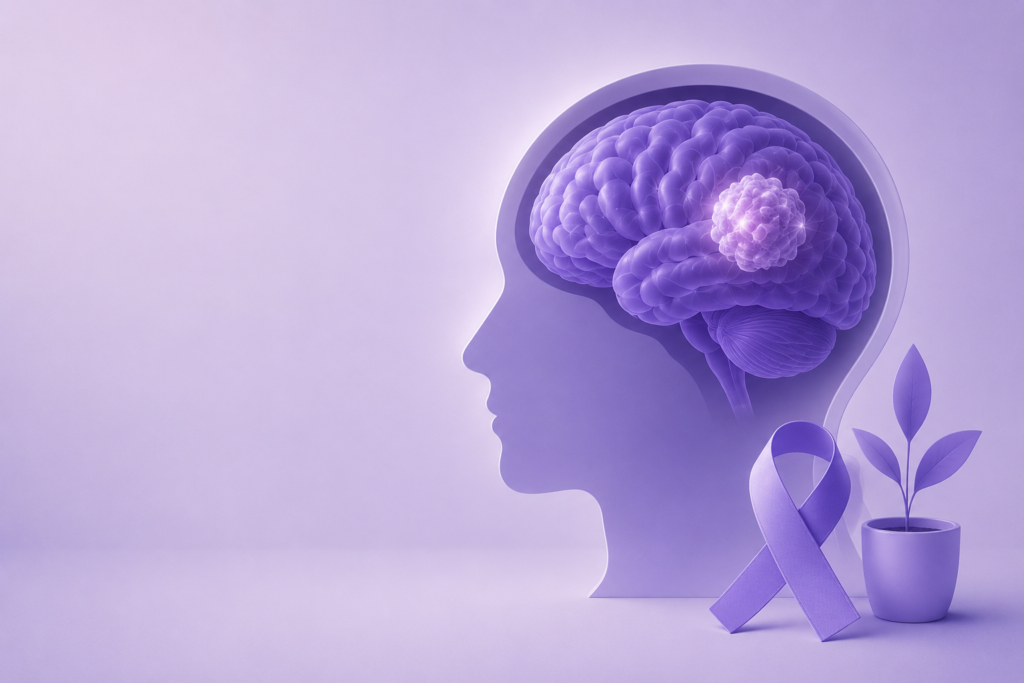
Every June 8, the world marks Brain Tumor Day. It started in 2000, when the German Brain Tumor Association first called for a day of awareness. Today, over 500 organisations across more than 30 countries observe it. I want to use this day differently. Not to share statistics that feel distant, but to talk plainly about what brain tumors actually mean for patients in India, what surgery involves, and what it costs across different cities.
Early Diagnosis Saves Lives - Book an Appointment Today with Dr Satyakam Baruah!
The Scale of the Problem in India
Brain tumors are not rare. The Indian Council of Medical Research estimates around 28,000 new cases of primary brain and nervous system tumors are diagnosed in India each year. That number does not account for secondary tumors, cancers that start elsewhere in the body and spread to the brain, which are even more common.
What is often missed: brain tumors affect people across all age groups. Pediatric brain tumors are the second most common solid tumor in children. In adults, the peak incidence for high-grade gliomas (the aggressive ones) falls between 45 and 65 years. I see patients from Faridabad, Delhi, Noida, and across the NCR regularly. Many of them waited months before coming in because they assumed headaches and blurred vision were something less serious.
That delay matters. The earlier a tumor is identified, the wider the surgical options available.
Symptoms That Should Not Be Ignored
Brain tumor symptoms do not always look dramatic. This is part of the problem. Some of the most common presentations I see in clinic are headaches that are worse in the morning, a seizure with no prior history, unexplained weakness on one side of the body, gradual personality changes that family members notice before the patient does, and speech that starts to sound slightly off.
None of these symptoms mean a brain tumor is definitely present. But each one warrants investigation, not watchful waiting. A contrast MRI of the brain is the standard first step. It is non-invasive, takes about 40 minutes, and provides enough information to guide what happens next.
Pituitary tumors, for instance, often cause vision problems before they cause headaches. The pituitary sits just beneath the optic nerves. I have diagnosed patients who had been visiting ophthalmologists for over a year before a neurosurgical referral happened. An MRI would have identified the problem immediately.
Not All Brain Tumors Are the Same
Worth saying plainly, because it changes everything about the conversation.
A meningioma, one of the most common brain tumors in adults, is almost always benign. Many meningiomas can be watched over time with serial imaging. When they do need surgery, outcomes are very good. More than 90% of patients with completely resected meningiomas are tumor-free at five years.
A glioblastoma (GBM) sits at the other end. It is aggressive, fast-growing, and difficult to treat. Surgery alone is not a cure. It is the first part of a treatment plan that usually involves radiation therapy (the Stupp Protocol) and chemotherapy with temozolomide. Median survival has improved over the past two decades but remains around 15 months for GBM, even with optimal treatment. Families need honest conversations about this.
Pituitary adenomas are mostly benign and very treatable through the nose, with no skull incision required. Acoustic neuromas are benign tumors of the hearing nerve and can often be managed with surgery or stereotactic radiosurgery depending on their size.
The grade and type of tumor determines treatment. Not all brain tumors need surgery. Not all brain tumors are a death sentence.
What Surgical Options Exist in India Today
Surgery has changed significantly over the past 15 years. When I trained at NIMHANS in Bangalore and then completed my fellowship at the Montreal Neurological Institute, McGill University, the shift toward minimally invasive approaches was already underway. Today, patients across India have access to the same surgical technology available in major neurosurgical centres globally.
Neuronavigation-guided craniotomy uses real-time computer imaging to map the tumor’s exact position relative to healthy brain tissue. Think of it as GPS for brain surgery. For tumors sitting near the speech centre, motor cortex, or other eloquent areas, neuronavigation allows surgeons to plan a path that removes as much tumor as safely possible while reducing the risk of neurological damage.
Minimally invasive keyhole surgery uses a much smaller opening in the skull than a traditional craniotomy. This means less blood loss, lower infection risk, and faster recovery. Patients typically go home within 4 to 6 days rather than 8 to 10.
Neuroendoscopy passes a thin camera through natural corridors in the brain. This is useful for tumors inside the ventricles or for accessing the pituitary without making any incision on the face or skull.
Laser Interstitial Thermal Therapy (LITT) delivers a laser probe into the center of a deep, small tumor and destroys it with heat, without any skull opening. It is not right for every tumor, but for selected patients it offers a remarkable reduction in recovery time.
Stereotactic brain biopsy is used when a tumor cannot be safely removed but needs to be identified. A small sample is removed under image guidance, sent for pathology, and the result shapes the entire treatment plan.
No single technique suits every patient. The choice depends on tumor type, location, size, and the patient’s overall health.
Brain Tumor Surgery Cost in India
Brain tumor surgery cost in India varies by city, hospital tier, and procedure. Across the country, a standard craniotomy starts at around ₹1,50,000 in cities outside the metros and can go up to ₹9,00,000 or more for advanced procedures like LITT or neuronavigation-guided surgery in premium Delhi or Mumbai hospitals.
A rough city-by-city comparison for a standard craniotomy:
| City | Standard Craniotomy (Approx.) | Advanced Surgery (Approx.) | Notes |
| Faridabad | ₹1,50,000 to ₹3,50,000 | ₹4,00,000 to ₹8,00,000 | NABH/JCI hospitals; lower cost than Delhi |
| Delhi | ₹2,50,000 to ₹5,00,000 | ₹5,00,000 to ₹10,00,000 | Wide range; premium hospitals highest |
| Gurugram | ₹3,00,000 to ₹5,50,000 | ₹5,50,000 to ₹10,00,000 | Corporate chains; higher room charges |
| Mumbai | ₹3,00,000 to ₹6,00,000 | ₹5,00,000 to ₹9,00,000 | Varies widely by hospital tier |
| Bangalore | ₹2,00,000 to ₹5,00,000 | ₹4,50,000 to ₹8,50,000 | Strong neurosurgery centres; competitive pricing |
| Chennai | ₹2,00,000 to ₹4,50,000 | ₹4,00,000 to ₹8,00,000 | Generally affordable; high-quality care |
| Hyderabad | ₹1,80,000 to ₹4,00,000 | ₹3,50,000 to ₹7,50,000 | Good value; growing neurosurgical infrastructure |
| Kolkata | ₹1,50,000 to ₹3,50,000 | ₹3,00,000 to ₹6,50,000 | Affordable; quality varies more by hospital |
These are indicative ranges. The actual figure depends on tumor type, surgical technique, ICU duration, room category, and whether radiation or chemotherapy is needed after surgery.
Standard packages include the surgeon’s fee, anaesthesiologist’s fee, operating theatre charges, ICU stay of 1 to 3 days, standard room stay of 5 to 7 days, basic medications, and one post-operative scan. Pre-operative investigations, radiation therapy, chemotherapy, and follow-up consultations are billed separately.
Most health insurance policies in India cover brain tumor surgery under inpatient hospitalisation. CGHS, ECHS, and PMJAY (Ayushman Bharat) are applicable at empanelled facilities. Ask the billing team for a written, itemised estimate before anything is scheduled.
What Questions Should You Ask Your Neurosurgeon
Families ask me this a lot, usually at the end of a consultation when they have run out of energy to process more information. These are the ones I would want answered if someone in my family had just been diagnosed:
What type of tumor is this, and what grade? Grade matters more than size for predicting behavior and choosing treatment.
Is surgery necessary now, or can we watch? Not every brain tumor needs immediate surgery. Some low-grade tumors in eloquent areas are better observed than operated on aggressively.
What is the goal of surgery: cure, control, or diagnosis? These are three different goals with different risk profiles. You deserve to know which one applies to your case.
What happens if I don’t have surgery? This is a legitimate question. The honest answer varies by tumor type, but you should hear it clearly.
What will recovery look like? Hospital stay duration, expected functional status at discharge, likely restrictions, follow-up imaging schedule. All of this should be explained before you sign a consent form.
If a surgeon cannot answer these questions clearly, or rushes through them, find another opinion. A second opinion on brain tumor surgery is not an insult to the treating doctor. It is standard practice.
Struggling with Seizures, Persistent Headaches, or Other Neurological Symptoms?
This World Brain Tumor Day
Awareness matters when it leads somewhere. If you have a family member who has had persistent morning headaches, a new seizure, or unexplained visual changes, the most useful thing this June 8 is to book a neurosurgical consultation, not to wait and see.
I run my practice in Faridabad and see patients from across Delhi NCR and other parts of India. The first consultation is a review of your imaging and a clear conversation about options. Nothing is decided without your full understanding.
Brain tumors are serious. They are not always what people fear them to be. The right information, delivered clearly, changes everything.
Book a Consultation: beyondseizures.com/book-appointment

 WhatsApp