Do’s and Don’ts During a Seizure: A Life-Saving Guide
Every year, thousands of people in India witness a seizure for the first time, on a bus, in a school classroom, at a wedding, in a crowded street. They want to help. But without the right knowledge, even a well-meaning response during a seizure can cause serious harm. This blog is for anyone who has ever wondered what to do during Epilepsy seizure.
Early Diagnosis Saves Lives - Book an Appointment Today with Dr Satyakam Baruah!
What Happens During a Seizure?
A seizure happens when there is a sudden burst of abnormal electrical activity in the brain. Think of it like a power surge in the brain’s wiring.
This can cause:
- Sudden shaking or jerking of the body
- Stiffening of the limbs
- Blank staring or loss of awareness
- Falling suddenly
- Confusion or unusual behaviour
- Repetitive movements like lip smacking or hand rubbing
- Strange sensations or smells before the episode begins
Not every seizure looks the same. Some are dramatic with full-body shaking. Others are as quiet as a few seconds of blank staring. Both need a calm, correct response.
Epilepsy is a neurological condition that causes repeated seizures. It affects around 50 million people worldwide. With the right epilepsy treatment and management, the vast majority of people with epilepsy live full, active, and independent lives.
The Do’s: What You Should Do During a Seizure
Knowing the right seizure first aid steps during an epilepsy seizure can prevent injuries, reduce panic, and help the person recover safely until emergency medical care is needed.
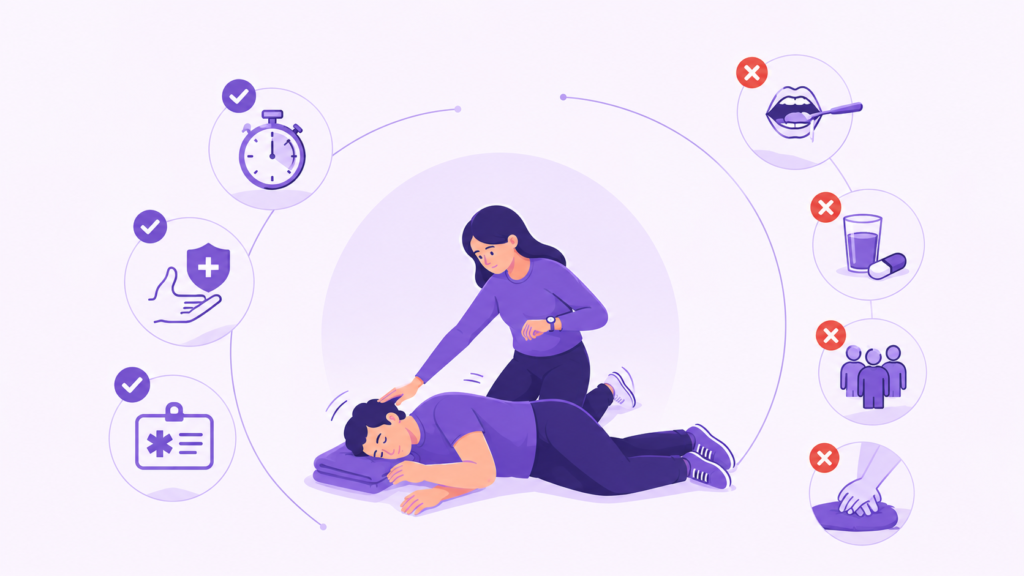
- Stay calm and stay with the person. Your presence matters. Speak softly to those around you. Most seizures stop on their own within one to two minutes. Staying calm helps everyone.
- Time the seizure from the moment it starts. Use your phone or watch. Note when it began. A seizure lasting more than five minutes is a medical emergency. This timing information is also very important for the treating doctor.
- Make the area safe. Gently move sharp objects, hard furniture, or anything dangerous away from the person. If they are near traffic, stairs, or water, guide them away only if you can do so safely.
- Cushion their head. Place something soft under their head, like a folded jacket or a bag. This protects the head from hitting the floor.
- Turn them gently onto their side after shaking stops. This is called the recovery position. It keeps the airway clear and allows saliva or vomit to drain out safely, reducing the risk of choking.
- Loosen any tight clothing. Gently loosen anything tight around the neck or chest to make breathing easier. Remove glasses if they are wearing them.
- Stay with them until they are fully awake. After the seizure, the person may feel confused, scared, or very tired. This is completely normal and is called the post-ictal phase. It can last a few minutes to half an hour. Speak calmly, let them know they are safe, and help them rest in a quiet place.
- Check for a medical ID. Look for a medical alert bracelet or card. It may carry important details about their epilepsy, medicines, or emergency contacts.
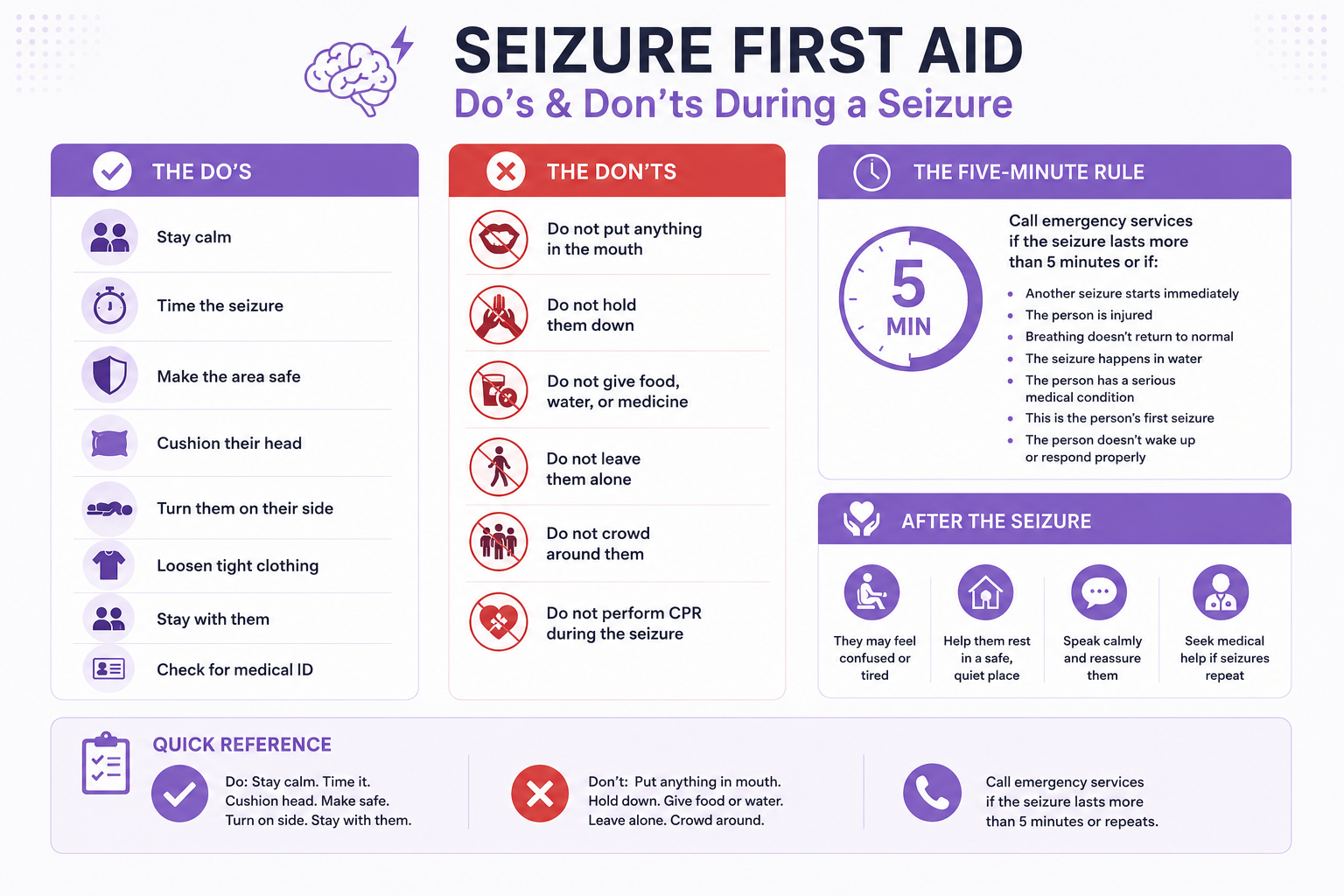
The Don’ts: What You Must Never Do During a Seizure
Understanding what not to do during a seizure can improve seizure safety, prevent complications, and ensure proper emergency response for people living with epilepsy.
- Do not put anything in the mouth. This is the most dangerous myth about seizures. A person cannot swallow their tongue during a seizure. That is physically impossible. Putting a spoon, cloth, your fingers, or any object into the mouth can break teeth, injure the jaw, block the airway, or cause a serious bite injury to your hand.
- Do not hold the person down. You cannot stop a seizure by force. Trying to restrain or pin someone during a seizure can cause fractures, muscle injuries, or joint damage.
- Do not give food, water, or medicine during or right after the seizure. The person cannot swallow safely during a seizure or immediately after. Wait until they are fully awake, sitting up, and talking clearly before offering anything.
- Do not leave the person alone. Even after the shaking stops, the person may be disoriented and at risk of injury. Stay until they are completely alert and safe.
- Do not crowd around the person. Ask bystanders to step back and give space. Waking up to a crowd of faces can increase confusion and distress.
- Do not perform CPR during the seizure. Breathing may appear irregular during a seizure, but it usually returns to normal as the seizure ends. Only begin CPR if the person is not breathing at all after the seizure has fully stopped and you are trained to do so.
The Five-Minute Rule: When to Call Emergency Services
Knowing when to call emergency services during an epilepsy seizure is a critical part of seizure first aid, as prolonged seizures or repeated seizure episodes can become a life-threatening medical emergency.
Most seizures end on their own. But call for emergency help immediately if:
- The seizure lasts more than 5 minutes
- Another seizure starts right after the first one without the person waking up in between
- The person is injured during the seizure
- Breathing does not return to normal after the seizure ends
- The seizure happens in water
- The person is pregnant, has diabetes, or has another serious health condition
- This is the person’s first ever seizure
- The person does not wake up or respond properly after the seizure
After the Seizure: What Comes Next?
The period after a seizure is called the post-ictal phase. The person may feel exhausted, confused, or temporarily unable to speak properly. This is normal and will pass.
Help them rest in a safe, quiet place. Do not rush them. Once they are fully awake, gently explain what happened. Ask if they have a doctor or need help reaching someone.
If seizures are happening regularly despite medication, it is time to seek a proper evaluation. Drug-resistant epilepsy, where seizures continue even with correct use of medicines, affects about one in three people with epilepsy. This condition has advanced treatment options available today.
When to Seek Expert Epilepsy Care in Faridabad
Seizure first aid protects a person in the moment. But repeated seizures need proper medical attention, not just first aid.
Dr. Satyakam Baruah in Faridabad offers comprehensive epilepsy diagnosis and treatment, including advanced options for those whose seizures do not respond to medicines. These include epilepsy surgery, Robotic Stereo-EEG mapping, Laser Interstitial Thermal Therapy (LITT), Vagus Nerve Stimulation (VNS), and other neuromodulation approaches. Many patients achieve complete seizure freedom with the right treatment plan.
Whether you are looking for a seizure specialist in Faridabad, need a second opinion, or are exploring options for drug-resistant epilepsy, expert help is available.
Struggling with Seizures, Persistent Headaches, or Other Neurological Symptoms?
A Quick Reference: Remember This Always
Use this quick seizure first aid checklist to remember the most important do’s, don’ts, and emergency warning signs during an epilepsy seizure.
Do: Stay calm. Time the seizure. Cushion the head. Move hazards away. Turn on their side. Stay until fully awake.
Do not: Put anything in the mouth. Hold them down. Give food or water. Leave them alone. Crowd around them.
Call emergency services if the seizure crosses 5 minutes, repeats without recovery, or involves injury.
Seizure First Aid Awareness Can Save Lives
Seizure first aid is a life skill that everyone should know, not just parents and caregivers, but teachers, classmates, colleagues, and neighbours too. The right response takes nothing more than calm, knowledge, and about two minutes of your time.
Epilepsy is a manageable condition. With the right treatment behind them and the right awareness around them, people with epilepsy can lead confident, full lives.
Share this guide. It may save someone you love.

 WhatsApp