Vagus Nerve Stimulation (VNS) in Delhi NCR
Vagus Nerve Stimulation (VNS) is a minimally invasive neuromodulation therapy for drug-resistant epilepsy, delivering electrical pulses to the vagus nerve without brain surgery. Approximately 50–55% of patients achieve 50% or greater seizure reduction at two years, with response continuing to improve over time. VNS therapy in Delhi NCR is offered through Beyond Seizures – a patient-focused epilepsy initiative by Dr. Satyakam Baruah, combining subspecialty neurosurgical expertise with transparent, evidence-based care.
Early Diagnosis Saves Lives - Book an Appointment Today with Dr Satyakam Baruah!
What Is Vagus Nerve Stimulation?
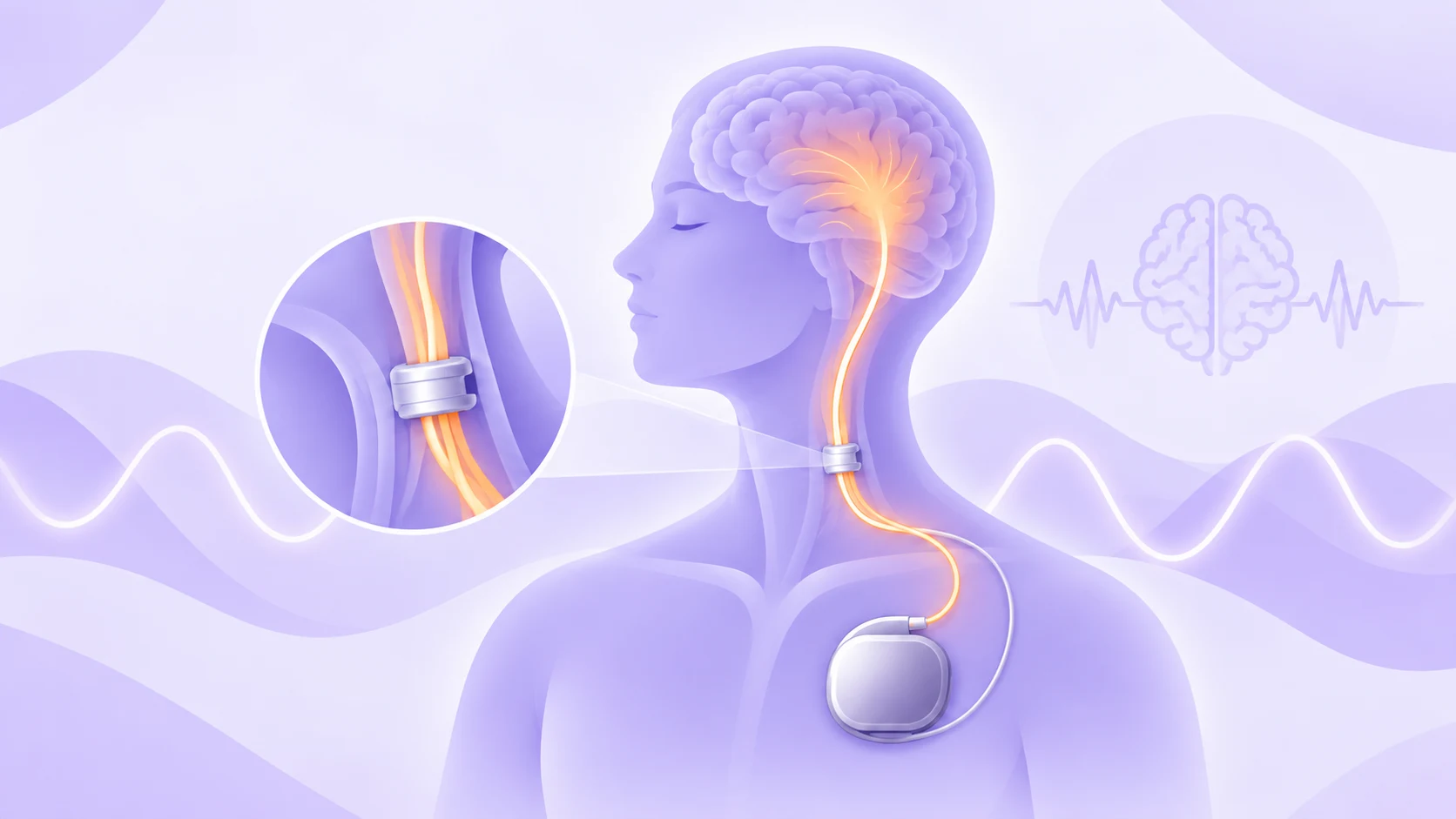
Vagus Nerve Stimulation (VNS) is a neuromodulation therapy in which a small implantable vagus nerve stimulation machine, often called a “nerve pacemaker,” is placed beneath the skin of the upper chest. A thin wire connects it to an electrode that wraps around the left vagus nerve in the neck. The device delivers regular, pre-programmed electrical pulses to the vagus nerve. Patients also receive a handheld magnet to trigger additional stimulation when a seizure is felt coming on.
VNS does not require brain surgery. The skull is never opened. The vagus nerve serves as the access pathway to the brain’s seizure networks, and this is one of VNS’s most consequential practical advantages over DBS or RNS. The therapy has been in clinical use since 1997. More than 150,000 patients worldwide have received VNS implants.
How Does VNS Work?
Many patients search for vagus nerve stimulation naturally because the vagus nerve is already a natural communication highway, the longest cranial nerve, running from the brainstem through the neck and into the abdomen. When electrical pulses travel up the left vagus nerve, they reach the nucleus tractus solitarius (NTS) in the brainstem, which connects broadly with cortical and limbic circuits involved in seizure generation. The locus coeruleus, activated by VNS, releases noradrenaline, which has well-established anticonvulsant effects. This “bottom-up” modulation gradually alters the brain’s electrical environment in ways that reduce seizure frequency over months and years.
Conditions Treated with VNS
- Drug-Resistant Epilepsy is the primary and best-evidenced indication. VNS is appropriate for patients with focal epilepsy, generalised epilepsy, and specific syndromes including Lennox-Gastaut syndrome and Dravet syndrome. Children as young as 4 years are eligible. Long-term data from the CORE-VNS registry, one of the largest prospective real-world studies in epilepsy, demonstrate durable seizure reduction across multiple epilepsy types at 24 and 36 months of follow-up.
- Treatment-Resistant Depression (TRD): VNS received FDA approval for treatment-resistant depression in 2005. Response in depression is slower; meaningful mood improvement typically emerges over 12 to 24 months of stimulation.
A note on vagus nerve stimulation for anxiety: VNS is not a standalone approved treatment for anxiety disorders. Some patients with treatment-resistant depression report anxiety improvement alongside mood benefits. This is discussed individually during consultation.
Who Is a Candidate for VNS?
You may be a suitable candidate if:
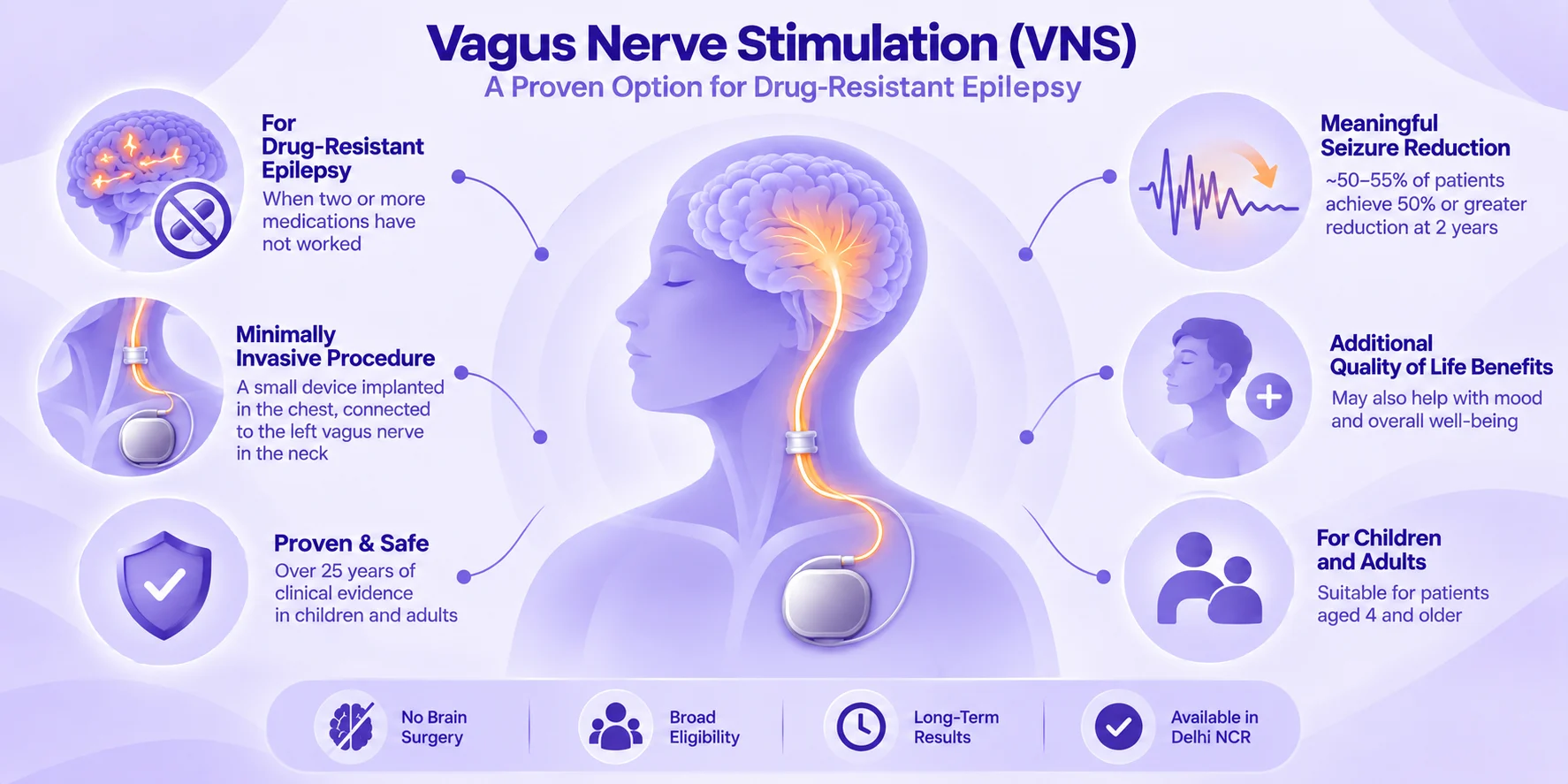
- You have drug-resistant epilepsy, meaning failure of two or more appropriately chosen anti-seizure medications
- You are not a candidate for resective surgery, or surgery has been considered and declined
- You are aged 4 or older with focal, multifocal, or generalised epilepsy
VNS is generally not recommended if:
- A clearly identified surgical focus exists, as resective surgery remains the preferred first option
- You have a pre-existing left vagotomy or significant cardiac arrhythmia
The evaluation at Amrita Hospital includes seizure history, MRI brain, video-EEG monitoring, and multidisciplinary review before any recommendation is finalised.
The VNS Procedure: What to Expect
- Pre-Surgical Evaluation: Dr Baruah reviews your seizure history, MRI, EEG, and full medication history to confirm drug resistance and assess candidacy. Complex cases are reviewed with neurologists, neuroradiologists, and neuropsychologists. A baseline seizure diary is established for 4 to 8 weeks before surgery. Realistic response rates, surgical risks, and alternatives are discussed in full with patient and family together.
- The Surgery: VNS implantation is a minor procedure under general anaesthesia, typically completed in 60 to 90 minutes. Two small incisions are made: one in the upper chest for the pulse generator, and one in the left side of the neck to position the electrode around the vagus nerve. There is no craniotomy. Most patients are discharged the same day or within 24 hours. The best vagus nerve stimulation device systems currently available, including the LivaNova SenTiva, offer AutoStim technology (automatic seizure-triggered stimulation), long battery life, and MRI-conditional design.
- Programming and Follow-Up: The device is activated 2 to 4 weeks after surgery. Parameters are adjusted non-invasively at follow-up visits using a wireless programmer. Battery replacement is required at end-of-service, typically 8 to 11 years, and is a brief, minor procedure.
Vagus Nerve Stimulation Benefits
- No brain surgery: the skull is never opened and the brain itself is never accessed
- Broad eligibility: focal, multifocal, and generalised epilepsy from age 4
- Over 25 years of real-world safety and efficacy data, longer than any other implanted epilepsy device
- Cumulative response: seizure reduction continues to improve over years, not a static result
- On-demand stimulation: the handheld magnet gives patients active agency over breakthrough seizures
- Mood benefits: documented improvements in depression and quality of life, independent of seizure reduction
Struggling with Seizures, Persistent Headaches, or Other Neurological Symptoms?
Vagus Nerve Stimulation Side Effects
The most common stimulation-related effects are hoarseness, throat tingling, cough, and mild shortness of breath, occurring during pulse delivery and manageable through parameter adjustment. No serious cognitive deterioration, significant infection, or permanent neurological injury attributable to the device has been documented in long-term studies.
All stimulation-related effects should be reported to Dr Baruah’s team. Never adjust device settings independently.
VNS vs Other Neuromodulation Therapies
| Feature | VNS | DBS | RNS | TNS |
| Brain surgery | No | Yes | Yes | No |
| Invasiveness | Minimally invasive | Invasive | Invasive | Non-invasive |
| Epilepsy types | Focal and generalised | Focal (thalamic) | Focal | Focal |
| Responder rate | approx. 50-55% at 2 years | approx. 50-60% at 2 years | approx. 50-60% at 2 years | approx. 40-50% |
| Paediatric use | Yes (age 4+) | Selected cases | Selected cases | Yes (age 9+) |
Dr Baruah’s approach is to match the neuromodulation strategy to the individual patient, not to recommend a single device for everyone. For some, VNS is the right first surgical step. For others, DBS, RNS, TNS, or resective surgery will be more appropriate.
On Vagus Nerve Stimulation Exercises and At-Home Techniques
Many patients search for vagus nerve stimulation exercises or vagus nerve stimulation at home methods such as breathing techniques, humming, and cold-water exposure, as ways to support vagal tone naturally. These practices are drawn from research into the autonomic nervous system and it is reasonable to ask about them.
The honest answer: non-invasive self-administered techniques may support general relaxation, but they have not been shown to reduce seizure frequency in clinical trials for drug-resistant epilepsy. They are not a substitute for evaluated neuromodulation therapy. Discuss any complementary practices with your neurologist before integrating them into your management plan.
Why Choose Dr Satyakam Baruah for VNS in Delhi NCR?
Dr Satyakam Baruah’s credentials:
- MCh Neurosurgery from NIMHANS, Bengaluru, one of India’s foremost neuroscience institutions
- Subspecialty fellowship at the Montreal Neurological Institute, McGill University, Canada
- Member of the MNI Robotic Stereo-EEG Team (2018 to 2019), with direct experience in advanced epilepsy mapping
- 20+ years of experience; 5,000+ procedures performed; 2,000+ epilepsy patients treated
- Active memberships: NSI, WSSFN, AANS, and Advisory Board Member of E.A.S.E., Hyderabad
Beyond Seizures is Dr Baruah’s initiative to make evidence-based neuromodulation care accessible to patients across Delhi NCR, combining subspecialty expertise with transparent, realistic communication about what treatment can and cannot achieve.
Amrita Hospital, Faridabad, which is NABH and NABL accredited, offers state-of-the-art neuro-imaging, specialised neuro-ICUs, and advanced EEG and video-EEG monitoring. For patients from Delhi, Gurgaon, Noida, and Ghaziabad, it is a serious and accessible option for VNS therapy.
Book Your Consultation
If you or a family member has drug-resistant epilepsy and medications are no longer providing adequate control, a specialist evaluation is the right next step. VNS therapy in Delhi NCR is available through Dr Satyakam Baruah’s neuromodulation programme at Amrita Hospital, Faridabad.
📞 Phone: +91-9650708834
💬 WhatsApp: Available via the same number
📧 Email: contact.satyakambaruah@gmail.com
Bring prior MRI reports, EEG recordings, and a full list of medications tried. The more information available, the more precise the evaluation.
Frequently Asked Questions
Is VNS a brain surgery? expand_more
No. VNS does not involve a craniotomy or any access to the brain. The device is placed in the chest and connected to the vagus nerve in the neck. The skull is never opened.
Who qualifies for VNS therapy in Delhi NCR? expand_more
Patients with drug-resistant epilepsy, meaning seizures continuing despite two or more appropriately chosen medications, aged 4 and older. A full evaluation by Dr Baruah is required to confirm suitability.
What is the best vagus nerve stimulation device available in India? expand_more
The LivaNova SenTiva is among the most advanced systems currently available, offering automatic seizure detection, long battery life, and MRI-conditional design. Device selection is based on the individual patient's clinical profile and is discussed during pre-surgical consultation.
How long does VNS take to work? expand_more
Most patients who respond begin to see meaningful seizure reduction within 3 to 6 months of activation. Response typically continues to improve over 1 to 3 years. Progressive improvement over time is the expected pattern; VNS is not an immediate fix.
What does VNS surgery cost in India? expand_more
VNS surgery cost in India varies depending on device model and hospital infrastructure. Dr Baruah's team provides a detailed, itemised estimate after evaluation. Please contact the clinic directly for current pricing.

Dr. Satyakam Baruah’s Medical Content Team
Dr. Satyakam Baruah’s medical content team specialises in creating accurate, clear, and patient-focused healthcare content. With strong clinical understanding and expertise in technical writing and SEO, the team translates complex medical information into reliable, accessible resources that support informed decisions and uphold Dr. Satyakam's commitment to quality care.
This content is reviewed by Dr. Satyakam Baruah
 WhatsApp