Epileptic Spasms Treatment in Faridabad
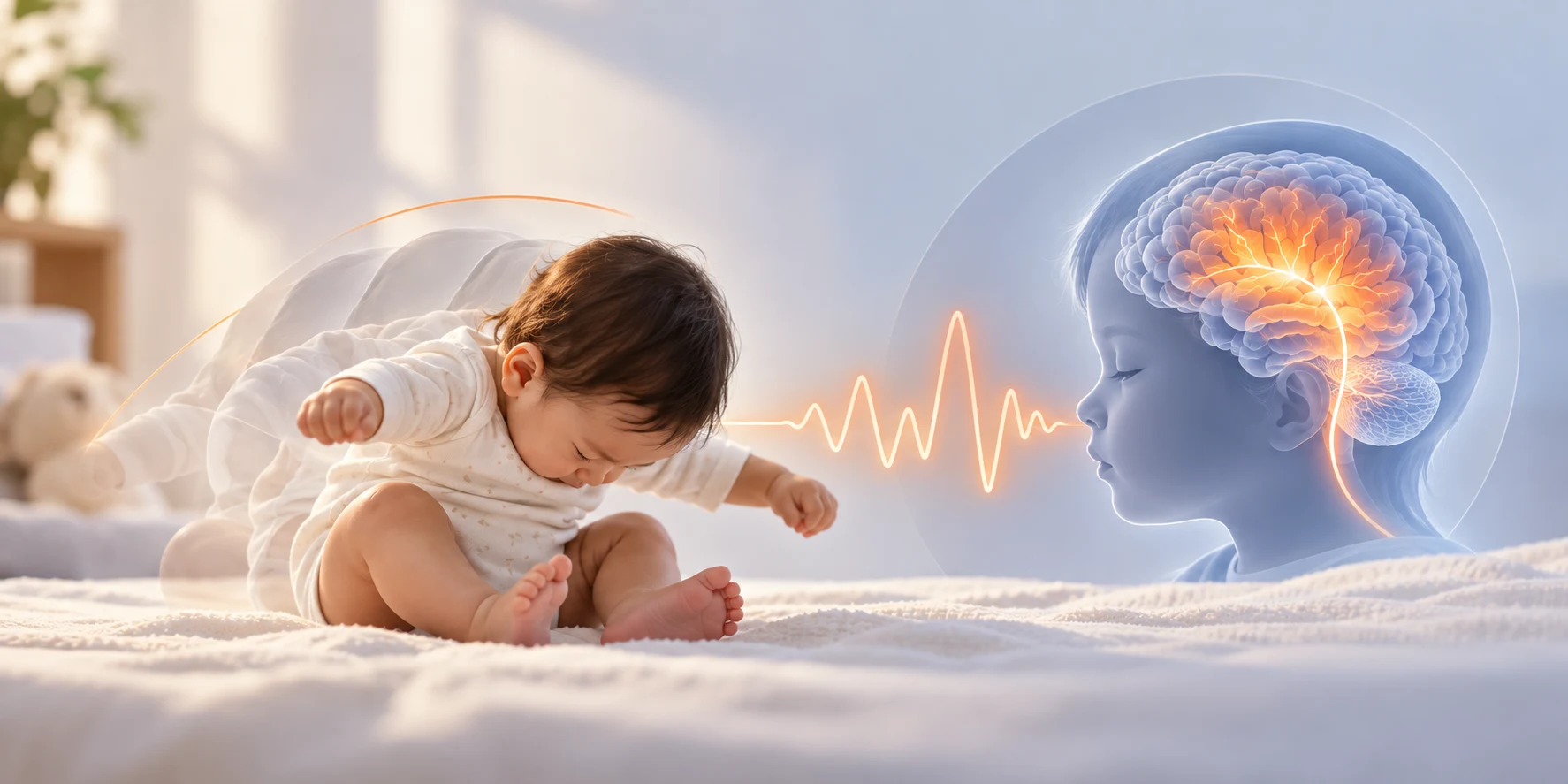
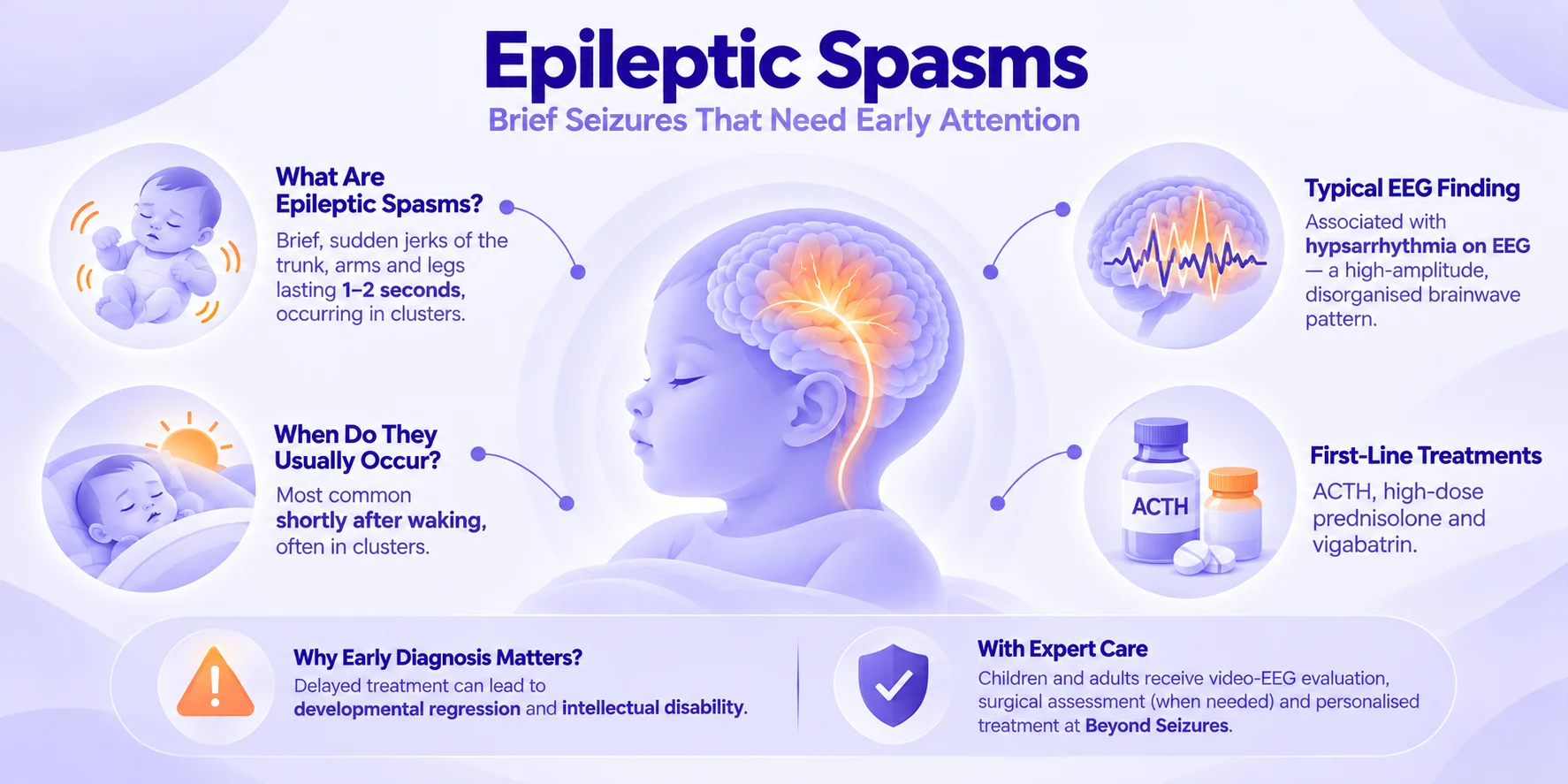
Epileptic spasms are brief, clustered axial jerks lasting one to two seconds, most common in infants shortly after waking, and associated with hypsarrhythmia on EEG. Delayed diagnosis risks developmental regression and intellectual disability. First-line treatments include ACTH, prednisolone, and vigabatrin. Through Beyond Seizures, Dr. Satyakam Baruah’s epilepsy initiative, children and adults receive expert video-EEG evaluation, surgical assessment, and personalised treatment – aligned with international epilepsy care standards.
Early Diagnosis Saves Lives - Book an Appointment Today with Dr Satyakam Baruah!
What Are Epileptic Spasms? Meaning and Definition
Epileptic spasms are a seizure type classified by the International League Against Epilepsy (ILAE). The term replaced the older age-restricted label “infantile spasms” as the standard classification because spasms of this kind occur not only in infants but also in older children and adults, though with decreasing frequency as age increases.
The epileptic spasm’s meaning, in clinical terms, is specific: a sudden axial (trunk-centred) jerk that is neither as brief as a myoclonic jerk nor as prolonged as a tonic seizure. Each individual spasm typically lasts 1–2 seconds. What makes them clinically significant is that they almost always occur in clusters – a series of 5, 10, 20, or more spasms in rapid succession, separated by pauses of 5–10 seconds. A single cluster can last several minutes.
They most commonly occur shortly after waking – a useful and consistent clinical clue for parents trying to decide whether what they are witnessing is epileptic or normal infant behaviour.
Epileptic Spasms Symptoms: What to Look For
Epileptic spasms symptoms can be subtle, particularly in young infants, which is why they are frequently mistaken for normal movements, startle responses, colic, or reflux.
Epilepsy Spasms In infants:
The classic presentation involves a sudden “jackknife” movement – the body bends forward at the waist, arms fly out or cross the chest, and the legs draw up simultaneously. This is the flexor type. Some infants have extensor spasms where the body arches backward, or a mixed pattern.
What do infantile spasms look like in day-to-day terms? Parents often describe the baby “folding in half” suddenly, or making a startled flinching movement that repeats in a row, stops, then begins again. The child may cry or seem briefly vacant between spasms. Watching an epileptic spasms video alongside a clinical description helps families recognise the pattern far more reliably than written description alone – most epilepsy specialists encourage parents to record episodes on their phone at home, as video review can be diagnostically decisive.
Other key epileptic spasms symptoms in infants include clustering of repetitions rather than isolated single events, consistent occurrence just after waking, a brief upward eye deviation during each spasm, and – critically – developmental regression. Loss of milestones the infant had already achieved, such as social smiling, eye tracking, or purposeful reaching, is one of the most alarming and diagnostically important features. Epilepsy symptoms in babies are not always convulsive or obvious, which is precisely what makes epileptic spasms so easy to overlook in the early weeks.
In older children and adults:
Epileptic spasms in adults are uncommon but do occur, particularly in individuals with pre-existing structural brain conditions. The presentation is often subtler – sudden brief trunk flexion, momentary loss of posture, or brief symmetric arm elevation, again typically in clusters. Epilepsy symptoms in adults with this seizure type are frequently under-recognised, and video-EEG is essential for accurate classification.
Infantile Spasms or Normal Movement? A Guide for Parents
Infantile spasms can closely resemble normal infant movements – particularly Moro reflexes, startle responses, or brief jerks during sleep transitions.
The key distinguishing features that suggest epileptic spasms rather than normal movement:
- Clustering: Normal movements do not repeat 10, 15, or 20 times in a row with brief pauses between each jerk. A Moro reflex happens once and stops. An epileptic spasm happens, pauses 5–10 seconds, happens again, and continues in this pattern for minutes. Clustering is the single most important red flag.
- Timing: Occurring consistently just after waking is a specific, recognisable pattern warranting investigation.
- Developmental regression: A baby losing skills they previously had – social smiling, eye contact, vocalising – alongside unusual repetitive movements should be evaluated urgently, without waiting for a scheduled appointment.
If there is genuine uncertainty, video the episodes and bring that footage to a specialist. At Dr Baruah’s , home video review is a standard part of the initial assessment for families concerned about unusual infant movements.
Epileptic Spasms vs Infantile Spasms
Infantile spasms is the age-specific clinical syndrome occurring in infancy, typically between 3–12 months, associated with hypsarrhythmia on EEG, and forming part of West syndrome when developmental regression is also present. West syndrome is defined by the triad of epileptic spasms, hypsarrhythmia, and developmental regression or arrest.
Epileptic spasms is the broader ILAE seizure-type classification that encompasses spasms at any age. All infantile spasms are epileptic spasms – but epileptic spasms in an older child or adult are not infantile spasms. The ILAE adopted the broader term specifically to prevent older patients from being missed or miscategorised.
Epileptic Spasms vs Myoclonic Jerks
This is one of the most common clinical distinctions that needs to be made, and it is not always straightforward without video-EEG.
- Duration: A myoclonic jerk is over in a fraction of a second – a sudden lightning-fast twitch. An epileptic spasm lasts 1–2 seconds with a more sustained contraction that gradually releases.
- Pattern: Epileptic spasms almost always cluster. Isolated single jerks without clustering are more typical of myoclonus.
- Body involvement: Epileptic spasms are predominantly axial, involving the trunk and proximal limbs symmetrically. Myoclonic jerks can be focal – affecting just an arm, a leg, or the face.
- EEG: The epileptic spasms EEG shows a high-amplitude slow wave or electrodecrement against a background of hypsarrhythmia. Myoclonic seizures show spike-and-wave or polyspike discharges. This EEG distinction is clinically critical because the two seizure types respond to entirely different treatments.
Epileptic Spasms vs Seizures
Epileptic spasms are a type of seizure – generated by abnormal synchronised electrical activity in the brain, recordable on EEG, and requiring anti-seizure treatment. The epileptic spasms vs seizures question sometimes arises because spasms look different from the convulsive seizures most people recognise. What distinguishes them from other seizure types is their specific cluster pattern, axial involvement, 1–2 second sustained duration, characteristic EEG, and the specific medications that are effective for them. Treating epileptic spasms with medications appropriate for other seizure types is a well-documented cause of treatment failure – accurate classification directly determines whether a child receives the right treatment.
Struggling with Seizures, Persistent Headaches, or Other Neurological Symptoms?
Epileptic Spasms EEG: What the Brain Activity Shows
In infants with West syndrome, the background EEG between spasms shows hypsarrhythmia – a severely disorganised, very high-amplitude pattern of mixed spikes, sharp waves, and slow activity with no normal organised rhythms for age. This background pattern is essentially diagnostic alongside the clinical picture, and its resolution with treatment is one of the key targets of therapy.
During each individual spasm, the EEG typically shows a high-amplitude slow wave, an electrodecrement (sudden flattening of background activity), or a combination of both. In older children and adults, the ictal EEG may be more focal or asymmetric, providing important information about underlying aetiology and surgical candidacy.
Video-EEG – simultaneous EEG and video recording – is the gold standard. It allows the clinician to correlate each clinical spasm with its EEG change, confirm the diagnosis, identify asymmetry, and guide the next step of management. Advanced video-EEG monitoring is available at Amrita Hospital, Faridabad as part of the epilepsy evaluation pathway.
Epileptic Spasms Treatment: What Works and When
Epileptic spasms treatment is one of the areas of paediatric epilepsy where early, correct treatment makes a measurable difference to developmental outcome. The goal is complete cessation of spasms and resolution of hypsarrhythmia – not just seizure reduction.
- ACTH: The most established first-line treatment for infantile spasms globally, producing spasm cessation and EEG resolution in approximately 50–60% of patients. Response typically becomes apparent within 2 weeks.
- High-dose prednisolone: An effective alternative to ACTH, with comparable efficacy demonstrated in the UKISS trial for infants without an identified structural cause.
- Vigabatrin: First-line specifically for tuberous sclerosis complex, achieving very high rates of spasm cessation. Also used in combination with hormonal therapies. Requires monitoring for visual field constriction with prolonged use.
When first-line treatments fail or spasms relapse, second-line options include combination hormonal and vigabatrin therapy, valproate, topiramate, pyridoxine (particularly where B6 dependency is suspected), and the ketogenic diet, which has a meaningful evidence base in refractory cases and is supervised as part of the comprehensive epilepsy programme.
- Surgical evaluation: A subset of children have a focal structural lesion – a cortical malformation, perinatal stroke, or area of focal cortical dysplasia – as the underlying cause. Early surgical resection in these cases produces significantly better outcomes than medication alone, and surgical assessment forms part of the initial workup rather than a last resort. High-resolution neuroimaging is mandatory for every child with a new diagnosis.
- Neuromodulation: For children who are not surgical candidates and evolve toward other drug-resistant syndromes, vagus nerve stimulation (VNS) and other neuromodulation pathways are considered as part of long-term management. Dr Baruah’s neuromodulation programme at Amrita Hospital evaluates each case individually.
Is Infantile Spasms Dangerous?
Yes – and this needs to be stated clearly.
The danger is not primarily the acute spasm itself. It is what ongoing, untreated epileptic spasms do to the developing brain over time. Persistent hypsarrhythmia is associated with progressive cognitive deterioration, intellectual disability, and transition to other severe epilepsy syndromes such as Lennox-Gastaut syndrome. The longer spasms continue without effective treatment, the greater and more lasting the damage.
Can infantile spasms be cured? For some children – particularly those without a structural cause and those with a surgically treatable lesion identified early – long-term seizure freedom is achievable. For others, ongoing management is needed. Prognosis is heavily determined by underlying aetiology and how quickly effective treatment was started. Every day between symptom onset and treatment matters.
Why Choose Dr Satyakam Baruah for Epileptic Spasms Treatment in Faridabad?
Epileptic spasms require a multidisciplinary framework: video-EEG characterisation, high-resolution neuroimaging, genetic workup, and surgical assessment where appropriate. This is the standard at experienced centres – and it is the standard Dr Baruah’s programme follows.
Dr Satyakam Baruah holds an MCh in Neurosurgery from NIMHANS, Bengaluru, and completed a subspecialty fellowship at the Montreal Neurological Institute, McGill University, Canada – a globally recognised centre for epilepsy surgery and neuromodulation. He was a member of the MNI Robotic Stereo-EEG Team (2018–2019), with direct experience in advanced epilepsy mapping techniques that directly inform surgical candidacy assessment in complex paediatric cases. With 20+ years of experience, 5,000+ procedures performed, and 2,000+ epilepsy patients treated, his practice spans the full spectrum of epilepsy management – from first-line medical therapy through to surgical and neuromodulation pathways.
The Beyond Seizures initiative, established by Dr Baruah to support holistic, education-centred epilepsy care, places particular emphasis on early-onset epilepsy syndromes where the window between diagnosis and effective treatment directly shapes a child’s developmental trajectory. Every case is evaluated thoroughly and individually. There are no default recommendations – only evidence-based decisions made in the patient’s best interest.
Amrita Hospital, Faridabad – NABH and NABL accredited – provides state-of-the-art neuro-imaging, specialised neuro-ICUs, and advanced video-EEG monitoring within a tertiary care environment aligned with international standards.
Book a Consultation for Epileptic Spasm Treatment
If your child has been showing unusual repetitive movements, has lost developmental milestones, or has a confirmed diagnosis of epileptic spasms not responding to current treatment, do not delay. Early evaluation is the single most important step you can take.
📞 Phone: +91-9650708834
💬 WhatsApp: Available via the same number
📧 Email: contact.satyakambaruah@gmail.com
📍 Address: Amrita Hospital, Mata Amritanandamayi Marg, RPS City, Sector 88, Faridabad, Haryana 121014
Bring any prior MRI reports, EEG recordings, home videos of the episodes, and a full medication history to the first appointment.

Dr. Satyakam Baruah’s Medical Content Team
Dr. Satyakam Baruah’s medical content team specialises in creating accurate, clear, and patient-focused healthcare content. With strong clinical understanding and expertise in technical writing and SEO, the team translates complex medical information into reliable, accessible resources that support informed decisions and uphold Dr. Satyakam's commitment to quality care.
This content is reviewed by Dr. Satyakam Baruah
Related Conditions

MRI Negative Epilepsy Treatment in Faridabad
MRI Negative Epilepsy Treatment in Faridabad by Dr. Satyakam Baruah offers advanced evaluation with Video EEG, PET, SPECT, SEEG, and…
Epilepsy Treatment in Faridabad
Epilepsy is a manageable neurological condition. Whether you’re newly diagnosed or living with drug-resistant seizures that haven’t responded to multiple…
Related Blogs
Is Epilepsy Hereditary?
In Summary – What You Need to Know Epilepsy is not always hereditary. About 30–40% of cases have…
Read Article →
When Seizures Don’t Stop: Drug Resistant Epilepsy
Drug resistant epilepsy is diagnosed when seizures continue despite trying at least two appropriate anti-seizure…
Read Article → WhatsApp