Brain Tumor Surgery in Faridabad
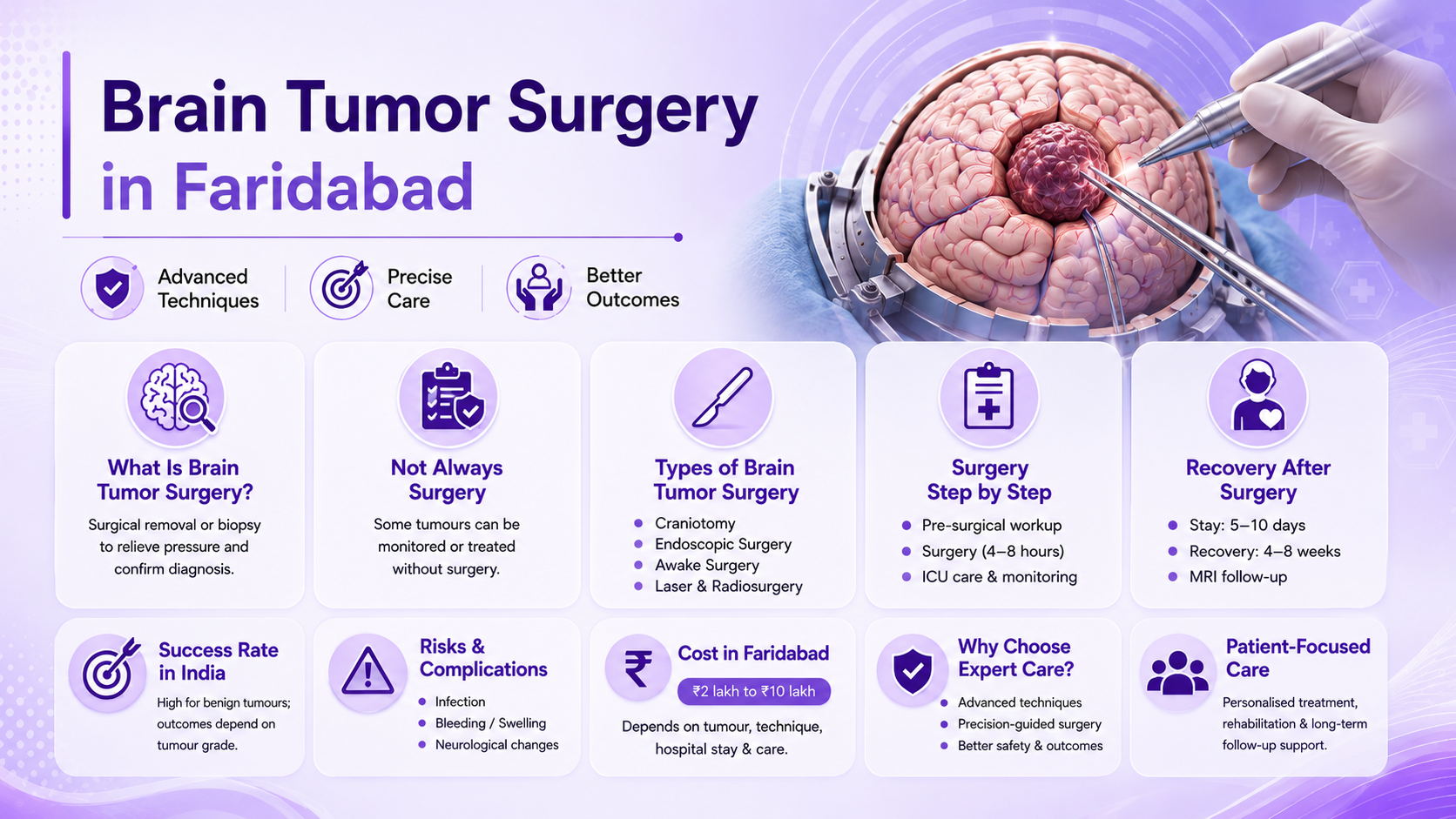
Brain tumor surgery in Faridabad under Dr. Satyakam Baruah includes the diagnosis, surgical treatment, and long-term management of both benign and malignant brain tumours using advanced neurosurgical techniques. Depending on the tumour’s type, size, and location, treatment may involve craniotomy, endoscopic brain tumor surgery, awake brain surgery, laser ablation, or stereotactic radiosurgery. Not all brain tumours require immediate surgery, and some cases may be managed through monitoring, radiation therapy, or chemotherapy. The surgical process includes detailed MRI-based planning, neuronavigation-guided tumour removal, ICU monitoring, and structured rehabilitation. Most patients stay in hospital for five to ten days, with overall recovery taking four to eight weeks. Brain tumor surgery success rates in India are high for many benign tumours, while outcomes for malignant tumours depend on tumour grade and follow-up treatment. Brain tumor surgery cost in Faridabad generally ranges from ₹2 lakh to ₹10 lakh based on complexity, technology used, and post-operative care requirements.
Early Diagnosis Saves Lives - Book an Appointment Today with Dr Satyakam Baruah!
What Is Brain Tumor Surgery?
Brain tumor surgery is the surgical removal or biopsy of abnormal tissue inside the brain. The aim is to safely take out as much of the tumour as possible, ease pressure on healthy brain tissue, and confirm the exact tumour type so further treatment can be planned with confidence.
The right approach depends on the tumour’s location, size, and grade. Types of brain tumor surgery include:
- Craniotomy for accessible tumours
- Endoscopic procedures for skull-base and pituitary tumours
- Awake surgery when the tumour lies near speech or movement areas
Dr. Satyakam Baruah is one of the best neurosurgeons for brain tumor surgery in Faridabad, serving patients across the Delhi NCR region.
Do All Brain Tumors Need Surgery?
Not every brain tumour requires immediate surgery. Treatment is decided based on the type of tumour, its size, exact location, the symptoms it produces, and the patient’s overall health. Our neurosurgical team takes time to review each case carefully before recommending a path forward.
For small, slow-growing benign tumours that are not pressing on critical structures, watchful waiting with regular MRI scans is often the right choice. Benign brain tumor surgery becomes necessary when:
- The tumour begins to grow on follow-up scans
- It causes seizures, vision changes, or persistent headaches
- It starts pressing on nerves or vital brain structures
For some patients, brain tumor treatment without surgery is possible through:
- Radiation therapy for certain tumour types
- Chemotherapy for specific malignant tumours
- Stereotactic radiosurgery for deep-seated lesions
That said, surgery remains the definitive treatment when a tissue diagnosis is required, when the tumour is causing significant symptoms, or when complete removal offers the best long-term outcome.
Modern advances have made surgery dramatically safer. Our team uses:
- Neuronavigation to plan the safest route to the tumour
- Minimally invasive brain tumor surgery techniques wherever suitable
- Awake surgery for brain tumors to protect speech and motor function
- Endoscopic brain tumor surgery for shorter recovery and minimal scarring
Types of Brain Tumor Surgery
Each Brain Tumor technique is chosen with one aim in mind – the safest, most effective outcome for the individual patient.
- Craniotomy and brain tumor resection surgery is the most widely performed approach. A small section of skull is temporarily removed so the surgeon can access and remove the tumour, then secured back in place. It gives excellent visibility and works for most accessible benign and malignant tumours.
- Endoscopic brain tumor surgery is a minimally invasive option ideal for tumours at the skull base, in the pituitary region, or within the ventricles. A thin camera-equipped tube is inserted through a natural opening such as the nose, avoiding any large incision and supporting faster recovery.
- Awake brain surgery is recommended when the tumour sits close to areas controlling speech, movement, or memory. The patient remains conscious during part of the operation and responds to gentle prompts while the surgeon maps and preserves these critical regions in real time.
- Laser ablation surgery for brain tumor, also called brain tumor laser surgery, is well suited for deep-seated lesions that are difficult to reach. A fine probe guided by MRI delivers targeted heat that destroys the abnormal tissue precisely.
- CyberKnife and Gamma Ray surgery for brain tumours are radiation-based options used either as primary treatment for small lesions or alongside conventional surgery to target microscopic residual cells with high precision.
Dr. Satyakam Baruah is a Consultant neurosurgeon with over 20 years of experience and offers the full range of modern neurosurgical techniques, tailored to the specific tumour and the patient’s condition.
Brain Tumor Surgery Procedure – Step by Step
Here is how the brain tumor surgery procedure unfolds under Dr. Satyakam Baruah
Step 1: Pre-surgical workup
- MRI scan with contrast, and functional MRI when needed
- Detailed neurological examination
- Blood tests and medical fitness checks
- Anaesthesia consultation
- Surgical planning using neuronavigation imaging
Step 2: Day of surgery
- General anaesthesia is administered (except in awake procedures)
- The head is carefully positioned and secured
- Neuronavigation tracks instrument position in real time
Step 3: The surgery itself
- Brain tumor surgery time is typically four to eight hours
- Complex or deep tumours may take longer
- A biopsy alone may take two to three hours
- Continuous intraoperative monitoring tracks brain activity, blood pressure, and oxygen levels
Step 4: Closing
- The bone flap is secured back in place
- The scalp is closed in layers
- Brain tumor surgery duration also includes safe awakening from anaesthesia
Step 5: ICU care
- Shift to the neurosurgical intensive care unit
- Close monitoring for the first 24 to 48 hours
- Regular neurological checks, pain control, and imaging when required
The brain tumor surgery name, whether craniotomy, resection, or biopsy, simply describes the access used. Every step is supported by a coordinated, experienced multidisciplinary team.
Recovery After Brain Tumor Surgery
Healing well takes time, the right support, and clear guidance. At Beyond Seizures, recovery after brain tumor surgery is structured to help patients regain strength, confidence, and independence.
Brain tumor surgery recovery time
- Hospital stay: typically five to ten days
- Full recovery: four to eight weeks for most patients
- Return to desk work: four to six weeks
- Driving and physical work: two to three months with medical clearance
Common side effects after brain tumor surgery
- Fatigue, which improves steadily over weeks
- Mild headaches and swelling near the incision
- Temporary changes in concentration or memory
- Occasional weakness, speech, or vision changes depending on tumour location
Most of these improve well with rest, rehabilitation, and time.
Life after brain tumor surgery
- Light walking is encouraged within days
- Gradual return to daily routines and social activities
- Sleep, hydration, and patience aid healing
- Family support plays a meaningful role
Diet after brain tumor surgery
- Protein-rich meals for tissue repair
- Leafy vegetables, whole grains, and fresh fruit
- Adequate hydration through the day
- Limit processed foods and excess sugar
Exercise after brain tumor surgery
- Begin with short, gentle walks
- Progress to light stretching as comfort allows
- Return to regular activity under medical guidance
Radiotherapy after brain tumor surgery or chemotherapy may be advised for malignant tumours, typically planned three to four weeks after the operation once the wound has healed.
MRI after brain tumor surgery follow-up:
- First scan at around three months post-op
- Six-monthly scans through the first year
- Yearly scans thereafter to confirm long-term stability
Our team stays in touch throughout this journey to answer questions, adjust medication, and support a smooth return to normal life.
Brain Tumor Surgery Success Rate in India
Outcomes are the most important measure for any family considering surgery. The brain tumor surgery success rate in India has improved substantially over the last decade, supported by better imaging, refined techniques, and well-trained neurosurgical teams.
Success rates by tumour type:
- Benign tumours such as meningiomas: success rates above ninety percent
- Pituitary adenomas: generally excellent long-term outcomes
- Low-grade gliomas: favourable outcomes with combined treatment
- High-grade gliomas: outcomes depend on extent of removal and follow-up therapy
Brain tumor surgery survival rate and life expectancy after brain tumor surgery depend on several factors:
- Tumour grade and type
- How completely the tumour is removed
- Patient age and overall health
- Response to post-operative treatment
Asking how successful brain tumor surgery is best answered by your neurosurgeon after reviewing your specific scans and pathology results.
Brain tumor surgery risks and complications
Like any major operation, brain tumor surgery risks exist and are discussed openly with every patient and family:
- Infection at the surgical site
- Bleeding or swelling
- Seizures
- Temporary or permanent neurological changes
These brain tumor surgery complications are minimised through careful planning, advanced monitoring, and dedicated post-operative care. So, is brain tumor surgery safe? With an experienced neurosurgical team and modern technology, it is safer today than at any point in the past, and for most patients the benefits clearly outweigh the risks.
Struggling with Seizures, Persistent Headaches, or Other Neurological Symptoms?
Brain Tumor Surgery Cost in Faridabad
Cost is a real-world consideration for every family, and we believe in being transparent about it.Brain tumor surgery cost in India typically ranges from ₹2 lakh to ₹10 lakh. The final figure depends on several factors:
- Tumour size, location, and complexity
- Choice of surgical technique (open, endoscopic, or laser)
- Hospital and ICU stay duration
- Need for additional treatments such as radiation
- Post-operative rehabilitation requirements
Brain tumor surgery cost in Faridabad combines advanced neurosurgical care with a value-oriented approach, giving Delhi NCR patients access to high-quality treatment closer to home.
For a personalised estimate based on your scans and clinical situation,reach out for a confidential consultation. We are happy to walk you through every component of the cost so there are no surprises later.
Why Choose Dr. Satyakam Baruah for Brain Tumor Surgery?
Choosing the right neurosurgeon can make a significant difference in both surgical outcomes and recovery after brain tumor surgery. Dr. Satyakam Baruah combines advanced neurosurgical expertise with compassionate, patient-focused care.
- Experienced neurosurgeon specialising in advanced brain tumor surgery and brain tumor removal surgery
- Trained at NIMHANS with international fellowship exposure at the Montreal Neurological Institute
- Expertise in minimally invasive neurosurgery, microsurgical tumour excision, and neuroendoscopy
- Skilled in treating both benign and malignant brain tumours with a focus on preserving neurological function
- Uses advanced imaging and precision-guided techniques to improve brain tumor surgery success rate and patient safety
- Comprehensive multidisciplinary care including neuro-oncology, neurocritical care, rehabilitation, and recovery support
- Accessible care for patients across Delhi NCR at Amrita Hospital Faridabad
- Strong focus on personalised treatment planning, clear communication, and compassionate patient care
- Dedicated support throughout recovery after brain tumor surgery and long-term follow-up care
With a commitment to clinical excellence and personalised care, Dr. Satyakam Baruah supports patients and families through every stage of brain tumour treatment with confidence, precision, and compassion.
Book a Consultation for Brain Tumor Surgery in Faridabad
Ready to take the next step toward expert brain tumour care? Dr. Satyakam Baruah provides advanced brain tumor surgery in Faridabad with precision-led treatment, modern neurosurgical technology, and dedicated recovery support. From diagnosis and surgical planning to rehabilitation and long-term follow-up, every stage of care is personalised to your condition and goals. Whether you are seeking a second opinion, minimally invasive surgery, or guidance for a complex brain tumour case, our team is here to help. Book a confidential consultation today and receive compassionate, evidence-based care trusted by patients across Delhi NCR.
Frequently Asked Questions
Q1. How long does brain tumor surgery take?
Most brain tumor surgeries take four to eight hours. Simple biopsies may be shorter, while complex or deep-seated tumours can take longer. The duration depends on tumour size, location, and the surgical technique used.
Q2. What are the side effects after brain tumor surgery?
Common side effects include fatigue, mild headaches, swelling near the incision, and temporary changes in concentration or memory. Some patients experience short-term weakness or speech changes that improve gradually with rest and rehabilitation.
Q3. What is the brain tumor surgery success rate in India?
Success rates vary by tumour type. Benign tumours like meningiomas often achieve success rates above ninety percent, while outcomes for malignant tumours depend on grade, extent of removal, and follow-up treatment. Modern techniques have significantly improved results across all categories.
Q4. Can a brain tumor be treated without surgery?
Yes, in some cases. Small, slow-growing benign tumours can be monitored with regular MRI scans. Certain tumours respond well to radiation, chemotherapy, or stereotactic radiosurgery. Surgery is recommended when a tissue diagnosis is needed or when symptoms are progressing.
Q5. What is the recovery time after brain tumor surgery?
Most patients stay in hospital for five to ten days and feel substantially recovered within four to eight weeks. Returning to work, driving, and physical activity follows a graded plan guided by the neurosurgeon.
Q6. What happens after brain tumor surgery and what should I expect?
You will spend the first day or two in the neurosurgical ICU for close monitoring, then move to a regular ward. After discharge, recovery includes rest, gradual return to activity, follow-up MRI scans, and, if required, radiotherapy or chemotherapy under coordinated specialist care.

Dr. Satyakam Baruah’s Medical Content Team
Dr. Satyakam Baruah’s medical content team specialises in creating accurate, clear, and patient-focused healthcare content. With strong clinical understanding and expertise in technical writing and SEO, the team translates complex medical information into reliable, accessible resources that support informed decisions and uphold Dr. Satyakam's commitment to quality care.
This content is reviewed by Dr. Satyakam Baruah
 WhatsApp