
Carpal Tunnel Treatment in Faridabad
Carpal tunnel syndrome is one of the most common nerve compression conditions of the hand, and it develops when the median nerve is squeezed as it passes through a narrow passage at the wrist. Many people first notice it as tingling in hands, numbness in fingers, or a dull wrist pain that worsens at night. Because the median nerve controls sensation and movement across the thumb side of the hand, even mild compression can affect grip, sleep, and daily comfort. Dr. Satyakam Baruah is a consultant neurosurgeon practising in Faridabad and assesses each case carefully to confirm whether symptoms are truly caused by carpal tunnel syndrome or by a pinched nerve elsewhere, and then plan Carpal Tunnel Treatment in Faridabad based on how advanced the compression is. Early evaluation gives the best chance of full recovery, so persistent hand symptoms should not be left unchecked.
Early Diagnosis Saves Lives - Book an Appointment Today with Dr Satyakam Baruah!
What is Carpal Tunnel Syndrome?
The carpal tunnel is a small channel on the palm side of the wrist, formed by the wrist bones below and a tough ligament above. The median nerve and several tendons pass through this tight space. When the tunnel becomes crowded, the median nerve is compressed, and this is what we call carpal tunnel syndrome.
This is true nerve compression syndrome. Anything that reduces the space inside the tunnel or increases pressure on its contents can pinch the nerve. Common contributing factors include repetitive wrist movement, swelling, and inflammation around the tendons. The compression interrupts the normal signals the median nerve carries, which produces the typical tingling, numbness, and wrist pain.
Several health conditions raise the risk. Repetitive wrist activity at work, diabetes, thyroid disorders, arthritis, and the fluid retention that occurs during pregnancy can all narrow the carpal tunnel or irritate the nerve. Identifying these factors is an important part of planning treatment, because addressing the underlying cause often improves the outcome.
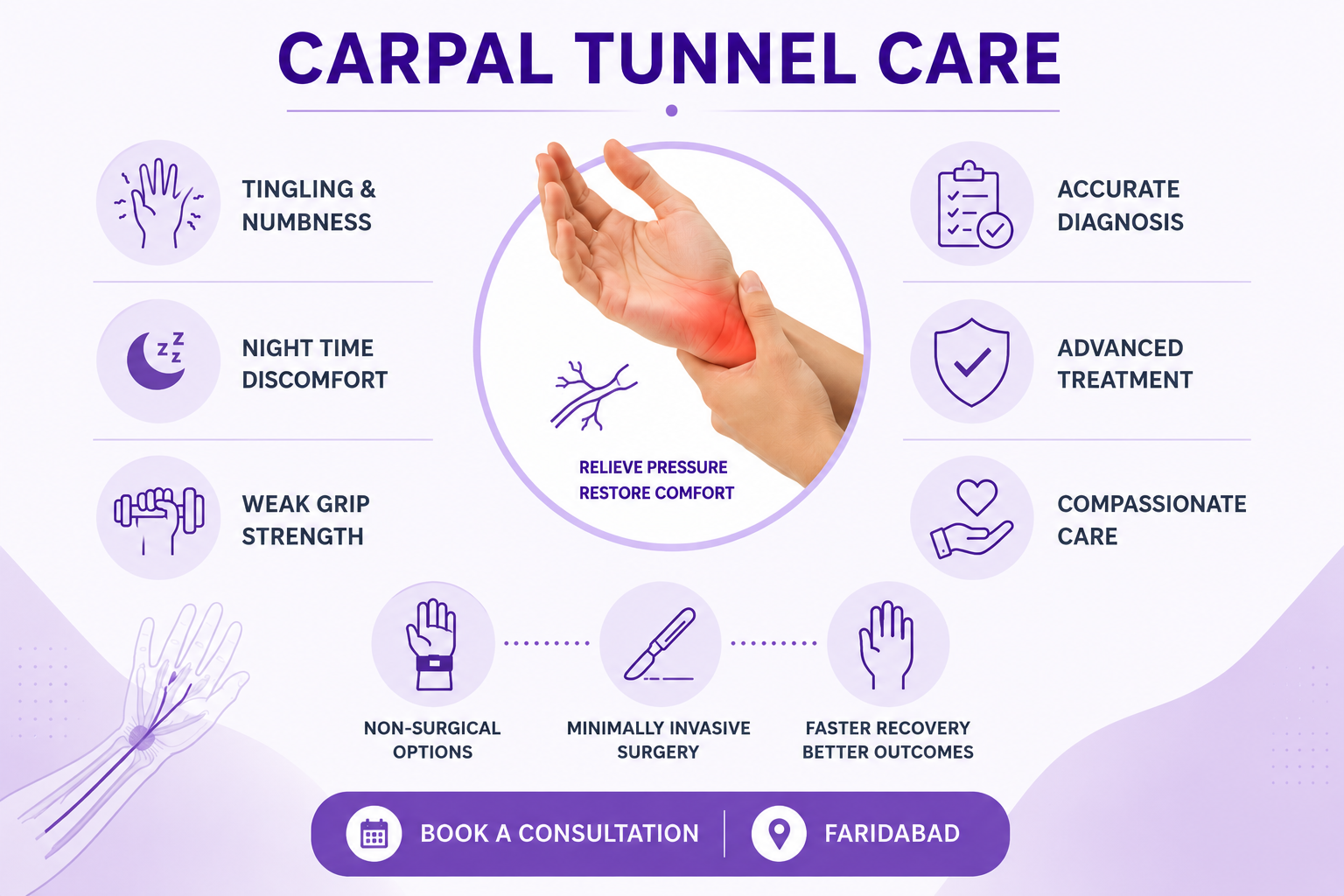
Common Symptoms of Carpal Tunnel Syndrome
Symptoms usually begin gradually and tend to involve the thumb, index, middle, and part of the ring finger, which is the area supplied by the median nerve. Recognising the pattern early helps patients seek care before the nerve is damaged.
- Tingling in Hands and Fingers – A frequent first sign is tingling in hands, often described as a pins-and-needles feeling. This tingling fingers sensation usually affects the thumb and the first two or three fingers and may come and go before becoming more constant. Numbness in fingers can follow, making it harder to feel small objects or judge how firmly something is being held.
- Hand Numbness While Sleeping – Many patients notice hand numbness when sleeping and wake at night needing to shake the hand to relieve it. Numb hands at night happen because the wrist often bends during sleep, which increases pressure inside the carpal tunnel. Night-time symptoms are one of the most reliable clues that the median nerve is involved.
- Wrist Pain and Burning Sensation – Carpal tunnel syndrome can also cause wrist pain and a burning pain in hand that sometimes spreads up the forearm. This wrist discomfort may be linked with activity or appear at rest, and it can make everyday tasks such as driving, holding a phone, or gripping a steering wheel uncomfortable.
- Weak Grip and Hand Weakness- As compression continues, hand weakness can develop. Patients may notice a weak grip strength, difficulty with buttons or jar lids, or dropping objects without warning. This weakness reflects the effect of long-standing pressure on the median nerve and is a sign that evaluation should not be delayed.
Persistent symptoms should not be ignored, as prolonged nerve compression may lead to permanent nerve damage. If you have ongoing tingling, numbness, or hand weakness, book a consultation for wrist pain and hand numbness.
What Causes Carpal Tunnel Syndrome?
Carpal tunnel syndrome is rarely caused by a single factor. In most patients it results from a combination of activities and health conditions that increase pressure on the median nerve. Understanding the cause matters, because a pinched nerve at the wrist behaves differently from a pinched nerve in the neck, and treatment must address the right level.
Common contributing causes include:
- Repetitive typing and manual work that keeps the wrist in a strained position for long periods, a form of repetitive strain injury.
- Prolonged phone and device use, which keeps the wrist bent and the tendons active.
- Diabetes, which can make nerves more vulnerable to compression and pressure.
- Thyroid disorders, which may cause tissue swelling around the carpal tunnel.
- Pregnancy-related swelling, where fluid retention temporarily narrows the tunnel; this carpal tunnel pregnancy pattern often improves after delivery.
- Arthritis of the wrist, which changes the shape of the joint and reduces space inside the tunnel.
- Poor workplace ergonomics, including an unsupported wrist, an awkward keyboard height, or a desk setup that forces sustained wrist bending.
Because these factors overlap, median nerve compression often builds slowly over months. Recognising and modifying the contributing causes is a key part of both treatment and long-term prevention.
How is Carpal Tunnel Syndrome Diagnosed?
A clear diagnosis of carpal tunnel syndrome is essential, because hand tingling and numbness can have several causes. I use a structured assessment to confirm carpal tunnel syndrome and to rule out other conditions before recommending treatment.
- Physical Examination – The evaluation begins with a detailed history and a careful physical examination. I check the pattern of numbness, grip strength, and any muscle wasting at the base of the thumb. Understanding when symptoms occur, especially whether they disturb sleep, helps build an accurate picture.
- Phalen Test and Tinel Sign – Two simple bedside checks support the diagnosis. The Phalen test involves holding the wrists in a bent position to see whether it reproduces tingling or numbness. The Tinel sign involves gently tapping over the median nerve at the wrist; a tingling response suggests nerve irritation. These tests guide the next steps but are interpreted alongside the full examination.
- Nerve Conduction Studies and EMG – When confirmation is needed, a nerve conduction study and EMG measure how well the median nerve carries signals across the wrist. This carpal tunnel test shows the severity of compression and helps distinguish carpal tunnel syndrome from other nerve problems. It is one of the most useful tools for planning whether non-surgical care or surgery is appropriate.
Advanced diagnostic evaluation for carpal tunnel syndrome is available in Faridabad by Dr. Satyakam Baruah, allowing an accurate diagnosis before any treatment decision is made.
Carpal Tunnel Treatment Options in Faridabad
Carpal tunnel treatment is tailored to the severity of symptoms, the degree of nerve compression, and the patient’s daily needs. Many people improve with non-surgical measures, while those with severe or long-standing compression may benefit from surgery. The aim of carpal tunnel treatment in Faridabad is to relieve pressure on the median nerve, ease symptoms, and protect long-term hand function.
Non-Surgical Carpal Tunnel Treatment
For mild to moderate cases, treatment for hand numbness usually begins without surgery. Common non-surgical options include:
- Wrist splints, often worn at night, to keep the wrist in a neutral position and reduce pressure inside the carpal tunnel.
- Anti-inflammatory medication, which may help reduce swelling around the tendons.
- Activity modification, adjusting tasks that strain the wrist.
- Physiotherapy and hand therapy to support the nerve and improve wrist mechanics.
- Ergonomic correction at the desk or workstation.
These measures are most effective when started early. Learning how to relieve carpal tunnel pain through splinting, rest, and simple carpal tunnel exercises can make a meaningful difference before the condition progresses.
Physiotherapy and Exercises
Physiotherapy plays an important supporting role. A structured programme may include nerve gliding exercises that help the median nerve move freely through the tunnel, gentle stretching, posture correction, and strengthening once symptoms settle. Carpal tunnel exercises are usually guided by a therapist so that movements are done correctly and do not aggravate the nerve. Hand therapy is especially useful for patients whose symptoms are linked to repetitive activity.
Minimally Invasive Carpal Tunnel Surgery
Surgery is considered when symptoms are severe, when there is muscle weakness or wasting, or when non-surgical treatment has not given adequate relief. Carpal tunnel release surgery works by dividing the ligament that forms the roof of the tunnel, which creates more space and relieves pressure on the median nerve.
Modern techniques allow this to be done through small incisions. Minimally invasive surgery, including endoscopic carpal tunnel surgery in selected cases, is associated with smaller wounds and a focused recovery. The procedure is typically short, and most patients return home the same day. Recovery timelines and expected results depend on how long the nerve was compressed and how severe the changes were before surgery, which is why early evaluation is encouraged.
Get evaluated for tingling in your hands today. Consult a specialist like Dr. Satyakam Baruah for carpal tunnel treatment in Faridabad to understand which option suits your condition.
Recovery After Carpal Tunnel Treatment
- Recovery after carpal tunnel surgery varies from person to person and depends largely on the severity of compression before treatment. Most patients can use the hand for light activities soon after surgery, while a stronger and more confident grip returns gradually over several weeks as the nerve settles.
- Healing time from Carpal tunnel surgery is influenced by the type of work a patient does. Those with desk-based roles often return to work earlier than those whose jobs involve heavy or repetitive hand use, and I provide return-to-work guidance based on each individual situation. Physiotherapy supports recovery by restoring wrist movement, reducing stiffness, and rebuilding strength.
Long-term outcomes are generally good when carpal tunnel syndrome is treated before severe nerve damage occurs. Hand function recovery is usually more complete in patients who seek care early, which is one more reason not to delay assessment of persistent symptoms.
Struggling with Seizures, Persistent Headaches, or Other Neurological Symptoms?
Two Conditions Commonly Misdiagnosed as Carpal Tunnel
Hand tingling and numbness are not always due to carpal tunnel syndrome. Two conditions misdiagnosed as carpal tunnel are particularly important to recognise, because treating the wrong problem will not relieve symptoms.
Cervical Radiculopathy
Cervical radiculopathy is a pinched nerve in the neck, where a nerve root is compressed by a slipped disc or bony changes in the cervical spine. It can cause tingling and numbness that travel into the hand, which is why it is sometimes mistaken for carpal tunnel syndrome. However, cervical radiculopathy often involves neck pain and symptoms that spread along the arm in a different pattern. As a neurosurgeon in Faridabad Dr. Satyakam baruah assess both the neck and the wrist to identify the true source of the nerve symptoms.
Arthritis of the Wrist or Hand
Arthritis affects the joints rather than the nerve. It can cause pain, stiffness, and reduced hand function that may overlap with carpal tunnel symptoms. Distinguishing arthritis from nerve compression is important, because the two conditions are treated very differently, and some patients have both at the same time.
Carpal Tunnel vs Arthritis
Because both conditions affect the hand, patients often ask whether they have arthritis or carpal tunnel. The table below outlines the key differences, although a proper examination is always needed for an accurate diagnosis.
| Feature | Carpal Tunnel Syndrome | Arthritis |
| Cause | Median nerve compression | Joint inflammation |
| Symptoms | Tingling and numbness | Joint stiffness |
| Pain Pattern | Worsens at night | Linked to activity |
| Affected Area | Thumb, index, middle finger | Joints of the hand or wrist |
Carpal tunnel vs arthritis is best resolved through clinical assessment, because the right diagnosis decides whether nerve-focused or joint-focused treatment in Faridabad is needed.
Is Carpal Tunnel Syndrome Permanent?
A common concern is whether carpal tunnel is permanent. The answer depends largely on how early it is treated. When carpal tunnel syndrome is identified at an early or moderate stage, symptoms can often improve significantly, and in many cases the condition is reversible with appropriate treatment.
In severe or long-untreated cases, prolonged pressure can cause permanent nerve damage, with lasting numbness or weakness. This is why timely diagnosis matters so much. For most patients who ask whether carpal tunnel can go away, the realistic answer is that early treatment offers the best chance of full recovery, while delay increases the risk of lasting changes.
Can Carpal Tunnel Syndrome Be Prevented?
In many cases it is possible to reduce the risk of carpal tunnel syndrome, particularly when symptoms are linked to repetitive activity. Practical steps to prevent carpal tunnel syndrome include:
- Setting up a proper desk arrangement so the wrist is supported and not bent for long periods.
- Maintaining a neutral wrist posture during typing and device use.
- Taking regular breaks during repetitive tasks to rest the hands.
- Practising simple hand stretching exercises throughout the day.
- Using ergonomic keyboards and a workstation that follows good wrist ergonomics.
These measures do not guarantee prevention, especially when other health conditions are involved, but good habits and early attention to symptoms can lower the risk and slow progression.
Why Choose Dr. Satyakam Baruah for Carpal Tunnel Treatment in Faridabad?
Carpal tunnel syndrome involves compression of a peripheral nerve, and accurate diagnosis combined with appropriate Carpal Tunnel treatment in Faridabad makes a significant difference to recovery. When you consult Dr. Satyakam Baruah in Faridabad, you receive:
- Experienced neurosurgical assessment, with careful attention to whether symptoms arise from the wrist or from a pinched nerve in the neck.
- Advanced diagnostics, including nerve conduction studies and EMG, to confirm the diagnosis and grade the severity.
- Minimally invasive treatment options, including modern carpal tunnel release techniques where surgery is needed.
- Rehabilitation support, with structured physiotherapy and hand therapy guidance.
- Patient-centred care, where treatment is explained clearly and planned around each individual’s needs.
Book a consultation for wrist pain and hand numbness. Consult a specialist for carpal tunnel treatment in Faridabad.
Book a Consultation for Carpal Tunnel Treatment in Faridabad
Dr. Satyakam Baruah is a consultant neurosurgeon in Faridabad with over 20 years of experience and provides detailed neurosurgical assessment, advanced diagnostic evaluation, and tailored carpal tunnel treatment in Faridabad, including both non-surgical care and minimally invasive surgical options where required.
Book Your Consultation
If you are experiencing:
- Tingling fingers
- Hand numbness while sleeping
- Weak grip strength
- Burning pain in the hand
- Persistent wrist discomfort
Schedule an evaluation for carpal tunnel syndrome today.
Frequently Asked Questions About Carpal Tunnel Treatment
1. What is the best treatment for carpal tunnel syndrome?
There is no single best treatment for everyone. Mild to moderate cases often respond to wrist splints, activity changes, and physiotherapy, while severe or long-standing compression may need carpal tunnel release surgery. The right choice depends on symptom severity and nerve study findings.
2. Is carpal tunnel surgery painful?
Carpal tunnel release is usually a short procedure performed with appropriate anaesthesia, so it is not painful during surgery. Some soreness around the incision afterwards is normal and is managed with simple measures during recovery.
3. Can carpal tunnel go away without surgery?
In early and moderate cases, symptoms can improve with non-surgical care such as splinting, ergonomic changes, and exercises. Surgery is usually considered when these measures do not give enough relief or when there is significant weakness.
4. How long does recovery take after carpal tunnel surgery?
Light hand use is often possible soon after surgery, while full strength returns gradually over several weeks. Recovery time depends on the severity of compression and the type of work the patient does.
5. Is carpal tunnel permanent?
It is not always permanent. Treated early, carpal tunnel syndrome is often reversible. Severe or long-untreated compression can cause lasting nerve damage, which is why timely evaluation is important.
6. What are the early signs of carpal tunnel syndrome?
Early signs include tingling in hands, numbness in the thumb and first fingers, and waking at night with numb hands. Mild wrist pain may also be present.
7. What is the difference between arthritis and carpal tunnel?
Carpal tunnel syndrome is caused by compression of the median nerve and mainly causes tingling and numbness. Arthritis affects the joints and causes stiffness and joint pain. The two are treated differently.
8. When should I see a doctor for tingling in my hands?
You should seek evaluation if tingling or numbness is persistent, disturbs sleep, or is associated with hand weakness, as these may indicate ongoing nerve compression.
9. Are carpal tunnel exercises effective?
Carpal tunnel exercises, including nerve gliding and stretching, can help in mild to moderate cases, especially when guided by a therapist. They are most effective as part of a wider treatment plan.
10. What causes hand numbness while sleeping?
Hand numbness at night usually occurs because the wrist bends during sleep, which increases pressure inside the carpal tunnel and compresses the median nerve.

Dr. Satyakam Baruah’s Medical Content Team
Dr. Satyakam Baruah’s medical content team specialises in creating accurate, clear, and patient-focused healthcare content. With strong clinical understanding and expertise in technical writing and SEO, the team translates complex medical information into reliable, accessible resources that support informed decisions and uphold Dr. Satyakam's commitment to quality care.
This content is reviewed by Dr. Satyakam Baruah
 WhatsApp